

Speaker
Robert Sapolsky
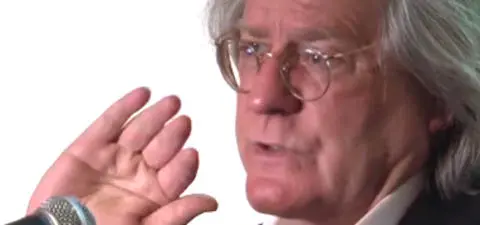
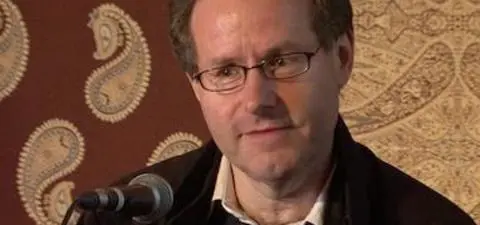
FollowRobert Sapolsky is an American academic, neuroscientist, and primatologist. He is the John A. and Cynthia Fry Gunn Professor at Stanford University and is a professor of biology, neurology, and neurosurgery. Sapolsky's research has focused on neuroendocrinology, particularly relating to stress. He is also a research associate with the National Museums of Kenya.
As a neuroendocrinologist, Sapolsky has focused his research on issues of stress and neuronal degeneration, as well as on the possibilities of gene-therapy strategies for protecting susceptible neurons from disease. He is working on gene-transfer techniques to strengthen neurons against the disabling effects of glucocorticoids. Sapolsky spends time in Kenya every year studying a population of wild baboons in order to identify the sources of stress in their environment, and the relationship between personality and patterns of stress-related disease in these animals.
Sapolsky has vigorously argued for a deterministic view of human behavior. According to him, "there is no free will, or at least that there is much less free will than generally assumed when it really matters". Sapolsky argues that human actions are determined by neurobiology, hormones, childhood, and life-circumstances.
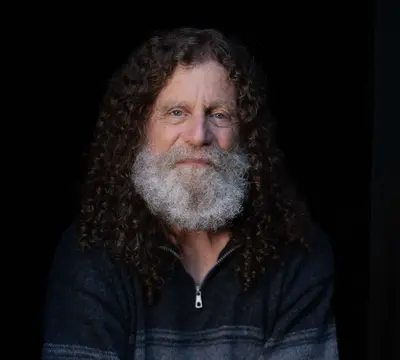
Robert Sapolsky is an American academic, neuroscientist, and primatologist. He is the John A. and Cynthia Fry Gunn Professor at Stanford University and is a professor of biology, neurology, and neurosurgery. Sapolsky's research has focused on neuroendocrinology, particularly relating to stress. He is also a research associate with the National Museums of Kenya.
As a neuroendocrinologist, Sapolsky has focused his research on issues of stress and neuronal degeneration, as well as on the possibilities of gene-therapy strategies for protecting susceptible neurons from disease. He is working on gene-transfer techniques to strengthen neurons against the disabling effects of glucocorticoids. Sapolsky spends time in Kenya every year studying a population of wild baboons in order to identify the sources of stress in their environment, and the relationship between personality and patterns of stress-related disease in these animals.
Sapolsky has vigorously argued for a deterministic view of human behavior. According to him, "there is no free will, or at least that there is much less free will than generally assumed when it really matters". Sapolsky argues that human actions are determined by neurobiology, hormones, childhood, and life-circumstances.
Robert Sapolsky Videos

More Videos

In Search of the Self
The Limits of Logic
The Fractured Mind
The Dance of Life
In search of ourselves
Neuroscience vs. Philosophy

The Limits of Reason
How to be a Stoic

The Mind and the World

The strangeness of things
The Limits of Freedom
The Secrets of Consciousness
Matter and Mind
Hearts and Minds

The chemistry of freedom
Mind and the Universe
Fate, freedom, and neuroscience

Truth, Lies and Self-Deception
Secrets of the Mind
The mind's eye
The extended mind
Owning Ourselves
Being Conscious
On Having a Mind, Having a Body, and Being a Person
The Fragility of the Human Personality
Dangerous Convictions
Actual Consciousness

Stories of Desire

At one with ourselves
Mind in the 21st Century

The Tyranny of Freedom
The Evolution of Consciousness
Thinking the unthinkable

The Edge of Reason
Metaphors of the Mind
The Road to the Good Life

Are Selves Unreal?

Is digital thinking different?
Animal Reason
Inside the Mind’s Eye
Catching Sight of Ourselves

The Philosopher’s Guide to Style
The Ego Trick
Sensuality and deception
Who Looks Back in the Mirror
Outrageous Fortune

The Architecture of Being
Entering the Unknown

Thinking Afresh
The View From Outside