

Monday 2nd February - 05:20 PM GMT
OPENING INTERVIEW: Organisms are interfaces between physical and non-physical worlds, with Michael Levin
Can biology go beyond materialism?
“Biological robots,” or biobots, built in synthetic biologist Michael Levin’s laboratory, challenge materialist orthodoxy. Levin, who directs the Tufts Center for Regenerative and Developmental Biology, creates these new lifeforms to regenerate bodies damaged by disease. In so doing, he is testing the limits of the standard story in biology, that we can explain living organisms solely in terms of genetics and environment.
He and his team claim to be discovering evidence that all organisms are interfaces between the physical world and a non-physical world of mathematical patterns and minds. Levin’s radical view is that only by shifting from physicalist to dualist metaphysics can biology understand how life works.
Join us for this exclusive live interview with Professor Levin, where we’ll discuss his extraordinary claims and discover why he thinks materialism is holding biology back.
To join this Zoom call today at 17:20GMT, please head to the 'Lounge' in our online venue. To access the Lounge, please click HERE.
Big ideas in your inbox.
Updates from the world's greatest minds - plus offers and discounts.
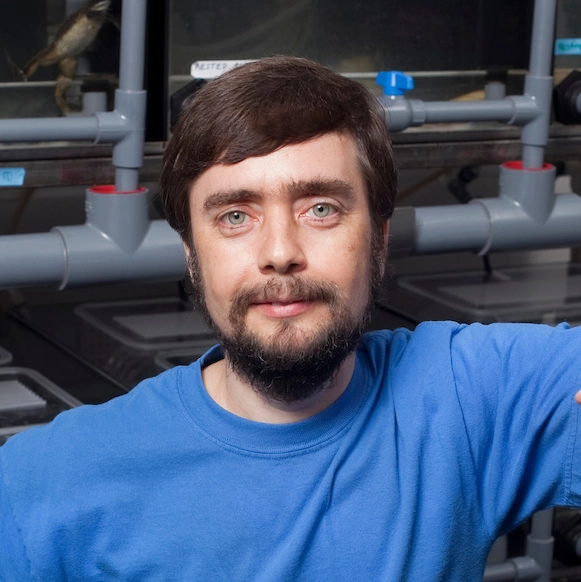
Michael Levin
Michael Levin is a pioneering biologist whose work is reshaping our understanding of life, intelligence, and the very fabric of biological form. As Professor of Biology and Director of the Allen Discovery Center at Tufts University, Levin investigates how cells communicate and cooperate through bioelectrical signals to build and repair complex bodies.
His research on regeneration, morphogenesis, and synthetic living systems, including the creation of programmable “biobots”, blurs the boundaries between biology, computation, and cognition. In exploring how intelligence might emerge from collective cellular decision-making, Levin invites us to reconsider what it means to be alive, to have a mind, and to act creatively in the world.
Levin’s early work on left-right asymmetry of embryonic bodies was chosen by the journal Nature as a “Milestone in Developmental Biology in the last century.