


A New World Order


About the Course
The war in Ukraine poses a major challenge to our global world order and represents a battle for ideological supremacy. Where has this growing instability come from? And what has made it possible? Join Nigel Inkster, who argues that technological progress is both a driver and enabler in Russia and China’s quest to establish a new world order.
By the end of the course, you will have learnt:
- The key drivers of instability in today’s international system.
- How technological progress shapes geopolitical power, particularly in Russia and China.
- The role of the war in Ukraine in challenging the existing world order.
- The impact of technological competition on democracy and global security.
- Comparative analysis of Western and Eastern strategies for technological supremacy.
IAI Academy courses are designed to be challenging but accessible to the interested student. No specialist knowledge is required.
Course Syllabus
About the Instructor
Nigel Inkster
Former director of operations and intelligence for the British Secret Intelligence Service, currently the Director of Geopolitical and Intelligence Analysis at Enodo Economics and senior advisor to the International Institute for Strategic Studies. Nigel is also the author of The Great Decoupling: China, America and the Struggle for Technological Supremacy.
Suggested Further Readings
- Inkster, N., The New Frontiers of War: Technology and Geopolitics in the 21st Century, (London: Hurst, 2022).
- Mearsheimer, J., The Tragedy of Great Power Politics, (New York: W. W. Norton, 2001).
- Nye, J. S., Soft Power: The Means to Success in World Politics, (New York: PublicAffairs, 2004).
- Allison, G., Destined for War: Can America and China Escape Thucydides’s Trap?, (Boston: Houghton Mifflin Harcourt, 2017).
- Freedman, L., The Future of War: A History, (London: Penguin, 2017).
- Huntington, S. P., The Clash of Civilizations and the Remaking of World Order, (New York: Simon & Schuster, 1996).
- Kissinger, H., World Order, (New York: Penguin, 2014).
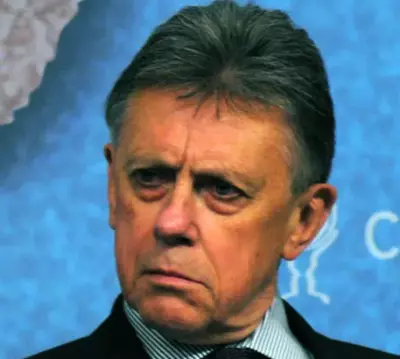
Meet your instructor
