Disrupting the Laws of Physics


About the Course
What are the laws of physics, and how do they act on the material world? How can we know them if they lie outside human comprehension? In this course, Harvard philosopher of physics Jacob Barandes challenges our assumptions about physical laws, arguing that the laws of physics are not what they seem and that we need to redefine them to make sense of Einstein and quantum theory.
By the end of this course, you will have learnt:
- What the laws of physics are and how different philosophical traditions — from Humeanism to primitivism — understand their nature and origin
- The measurement problem in quantum theory and why the distinction between measurement and non-measurement processes remains philosophically unresolved
- What Markovian and non-Markovian laws are, and how the state of a system determines our ability to make predictions about its future
- How concepts such as attractors, strange attractors, and chaos theory illuminate the behaviour of dynamical systems governed by physical laws
- What Laplace's demon reveals about determinism, predictability, and the limits of physical knowledge
- Why Noether's theorem connects the symmetries of dynamical laws to conservation laws, and what this tells us about the deep structure of physics
As part of the course, there is an assessment to consolidate your learning, suggested further readings to stimulate a deeper exploration of the topic, discussion boards to have your say, and an end-of-course assessment.
IAI Academy courses are designed to be challenging but accessible to the interested student. No specialist knowledge is required.
Course Syllabus
About the Instructor
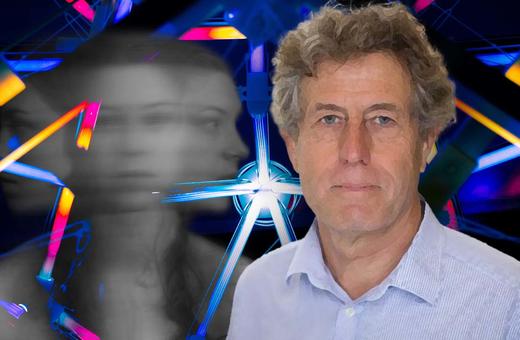
Jacob Barandes
Jacob Barandes is a Harvard University theoretical physicist and philosopher of science. His research explores the foundations of quantum theory, spacetime, and the nature of scientific explanation.
Suggested Further Readings
- Laplace, Pierre-Simon (1814/1951). A philosophical essay on probabilities. New York, NY: Dover.
- Hume, David (1748/2007). An enquiry concerning human understanding. Oxford, UK: Oxford University Press.
- Lewis, David (1986). Philosophical papers: Volume II. Oxford, UK: Oxford University Press.
- Noether, Emmy (1918). Invariante Variationsprobleme. Nachrichten von der Gesellschaft der Wissenschaften zu Göttingen, Mathematisch-Physikalische Klasse, 235–257.
- Rovelli, Carlo (2014). Seven brief lessons on physics. London, UK: Allen Lane.
- Somerville, Mary (1834). On the connexion of the physical sciences. London, UK: John Murray.

Meet your instructor
Videos in Science & Reality






























Latest Videos


Latest Articles