


Life Lessons from David Hume


About the Course
David Hume is considered by many to be one of the most important intellectual figures of the 18th century. As well as a revolutionary philosopher, Hume was a historian, economist, librarian, and essayist. His insistence on allowing his other interests to inform his writing saw him take philosophy out of the purely theoretical realm and place it within the practical. Such a wealth of knowledge and experience saw Hume not only offer guidance on how to reason and behave morally but also on how to live a flourishing life.
What does it mean to be rational? How ought we to live? Which philosophies should we adopt and which should we reject? Join philosopher and journalist Julian Baggini as he takes you through Hume’s most important life lessons. Baggini will take you on a riveting journey through ancient and early modern philosophy, Hume’s life's work, and his advice on how to live well, including an analysis of his triumphs and failures as a philosopher.
By the end of the course, you will have learnt:
- What it means to be rational according to Hume.
- How we can all be more rational.
- How we ought to treat others.
- How we should behave towards politics and religion.
- How we can live the most flourishing life possible.
IAI Academy courses are designed to be challenging but accessible to the interested student. No specialist knowledge is required.
Course Syllabus
About the Instructor
Julian Baggini
"Equating freedom with an absent state is an old conservative trick that suits only those who don’t need protecting"
Julian Baggini is a philosopher, journalist and author of over 20 books about Philosophy for the general reader. He is the co-founder of co-founder and editor of The Philosophers’ Magazine, who also writes and broadcasts for The Guardian and the BBC. Baggini is the author of Freedom Regained: The Possibility of Free Will, The Ego Trick: and The Duck That Won The Lottery.
His books have granted him critical acclaim for his efforts to popularise philosophy. He has also written for the New Humanist magazine, Guardian, the Financial times and Wall Street Journal. He is also the academic director of the Royal Institute of Philosophy.
"ingenious and open-hearted" - The Scotsman
Suggested Further Readings
- Hume, D., A Treatise of Human Nature, (Oxford: Oxford University Press, 2000 [1739–1740]).
- Hume, D., An Enquiry Concerning Human Understanding, (Oxford: Oxford University Press, 2007 [1748]).
- Hume, D., An Enquiry Concerning the Principles of Morals, (Oxford: Oxford University Press, 1998 [1751]).
- Baggini, J., How to Think Like a Philosopher: Learn the Lessons of Great Thinkers, (London: Granta, 2019).
- Norton, D. F., & Norton, M. J., David Hume: A Treatise of Human Nature, (Oxford: Oxford University Press, 2000).
- Selby-Bigge, L. A., A Commentary on Hume’s Treatise of Human Nature, (Oxford: Clarendon Press, 1896).
- Falkenstein, L., Hume’s Way of Naturalizing Ethics, (Oxford: Oxford University Press, 2011).
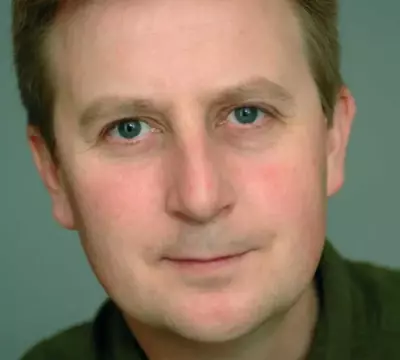
Meet your instructor
Co-founder and editor of The Philosophers’ Magazine, author of The Duck That Won The Lottery
