


We want to trust the clock, dismissing our strange and flexible experience of time as mere "psychological distortion". But philosopher Manuel Delaflor argues this dismissal is a mistake. Drawing on relativity, neuroscience and the strange testimony of anaesthesia and psychedelics, he contends that time is not something that proceeds outside of ourselves, but is generated by minds navigating possibility and constraint. Rather than tracking a hidden reality, Delaflor argues the clock is just one model among many, and a poor one for love, grief, boredom and the moments that change a life.
As I write this piece, I am still discovering where it wants to go, even though it is already written. Wait, what? Is it? No, no, not yet, because I am writing it right now. Then again, that cannot be right, because it is you who are reading it right now. Something is very wrong with the ordinary picture of time.
I am sure you have considered the strangeness of it before the little game above. An hour in a waiting room stretches into something indecent. It thickens. It drags. An hour lost in conversation with a lover disappears before you can even take a breath. The clock on the wall insists that both hours were identical, sixty minutes, three thousand six hundred seconds, a neat little procession of equal units. Your experience insists otherwise, and we simply shrug. “Psychology,” we are told. “Subjective distortion,” we say this as if the clock were stating the actual length, while we are simply wrong. But hold on to that shrug. What exactly is that clock measuring? What gives it the authority to overrule the felt texture of experience?
___
For most of Western history, time has worn a familiar face: the river. It flows, we are carried, events appear and vanish, childhood recedes, old age approaches.
___
For most of Western history, time has worn a familiar face: the river. It flows, we are carried, events appear and vanish, childhood recedes, old age approaches. This makes sense. Newton gave this intuition mathematical bones when he described absolute, true, mathematical time as something that flows equably without relation to anything external. There it is, the great cosmic current, the hidden metronome beneath every event. The universe as a billiard table. The balls click and scatter, space holds them, and time passes. The table simply is there. The space it occupies simply extends. Time simply continues, like the river, tick by tick, whether anyone observes it or not. Close your eyes, and the table remains, space holds it, time carries on. This feels so obvious that it barely seems worth saying, which is precisely why it needs to be examined.
Heraclitus gave us the world as flux, the impossibility of stepping into the same river twice. Parmenides stood at the opposite pole, denying change as a trick of mortal minds, insisting that what is, simply is. Augustine perhaps saw the mystery more clearly than either when he asked what time is, and confessed that if no one asks him, he knows, yet if he wants to explain it, he does not. There is the whole problem, naked. Time is perfectly familiar until we try to say what it is. It is the background of every sentence, every memory, every plan, every regret, every promise, yet the moment we turn towards it directly, it seems to dissolve into something unintelligible.
 SUGGESTED VIEWING
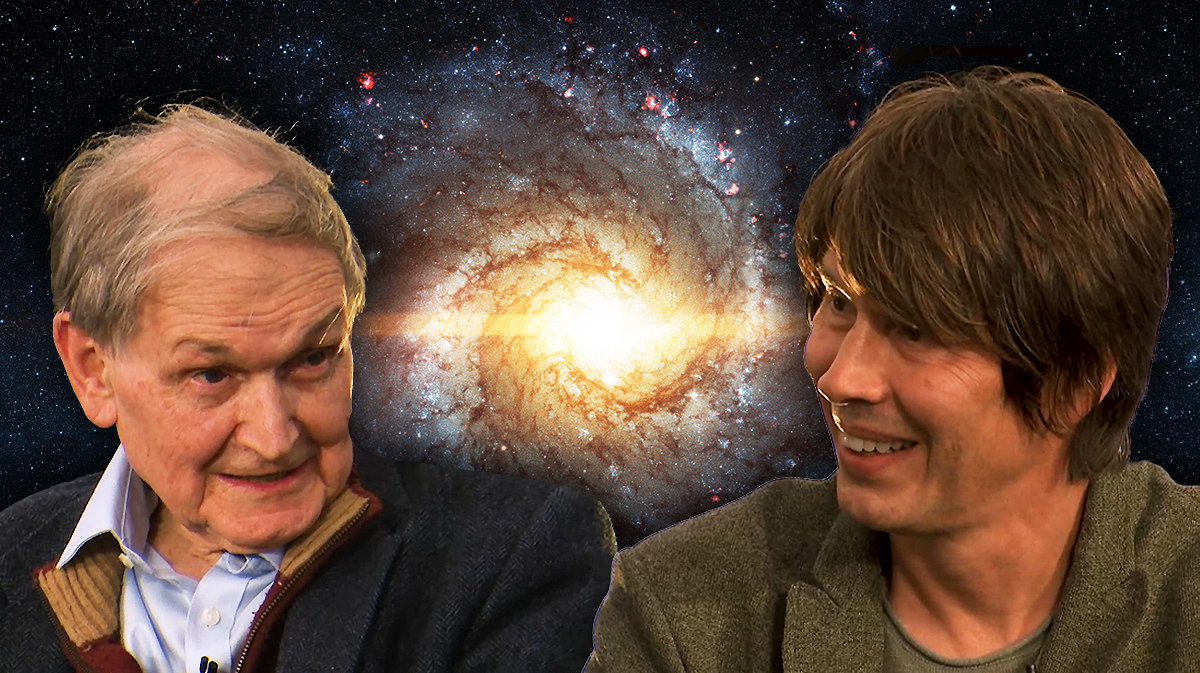
Our future theories of the universe
With Roger Penrose, Brian Cox
SUGGESTED VIEWING
Our future theories of the universe
With Roger Penrose, Brian Cox
Want to continue reading?
Get unlimited access to insights from the world's leading thinkers.
Browse our subscription plans and subscribe to read more.
Already a subscriber? Log in
Love the iai?
Sign up to get exclusive access.

Related Posts:



Related Videos:


16th June 2026


Join the conversation