Monday 3rd August - 07:20 PM BST
Talk: Metamodernism and the Return of Meaning
From irony and scepticism to hope and imagination
Postmodernism challenged the grand narratives that shaped modern culture, questioning ideas of progress, identity, and meaning. But metamodernism suggests we are entering a new cultural moment, one that moves beyond irony and scepticism to explore renewed forms of hope and imagination. Join author of Say Hello to Metamodernism! Greg Dember and co-founder of the webzine Notes on Metamodernism Timotheus Vermeulen as they explore how metamodernism is reshaping culture and society, and examine what metamodernism reveals about our search for meaning in an uncertain age.
Big ideas in your inbox.
Updates from the world's greatest minds - plus offers and discounts.
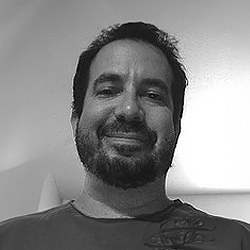
Greg Dember
Metamodern musician and writer
Greg Dember is author of Say Hello to Metamodernism!: Understanding Today’s Culture of Ironesty, Felt Experience, and Empathic Reflexivity and editor of the blog “What is Metamodern?” He investigates metamodern tendencies in film, music, literature, architecture, politics and language, from Wes Anderson and Greta Gerwig movies to the music of Billie Eilish. Dember argues that the metamodern protects “interior, subjective felt experience from the ironic distance of postmodernism, the scientific reductionism of modernism, and the pre-personal inertia of tradition.”
When not writing and speaking about the metamodern, Dember is also an acclaimed “post-genre” singer-songwriter. His latest book is an edited anthology, My Impossible Soul: The Metamodern Music of Sufjan Stevens (Bloomsbury, 2026).

Timotheus Vermeulen
Pioneering cultural theorist
Timotheus Vermeulen is one of the leading theorists of post-millennial culture and aesthetics, and the co-author of the landmark essay, “Notes on Metamodernism,” which set the agenda for thinking about how culture might go beyond postmodernist disorientation. The metamodern, he argues, “oscillates between a modern enthusiasm and a postmodern irony, between hope and melancholy, empathy and apathy, unity and plurality, totality and fragmentation.” This oscillation provides a way to recover depth, meaning and metaphysics itself from the shards left by postmodern critiques of Enlightenment truth and reason.
Vermeulen is Professor of Media, Culture and Society at the University of Oslo. His latest book is Plastic Time: Gesture on Screen (SUNY, 2026).