



From waxwork figures to David Lynch films, we’re often both attracted and repelled by the uncanny. Philosopher Mark Windsor argues this reveals something deep about our psychology and the relationship between reality and our theories. The uncanny arises, he suggests, when experience contradicts our most deeply held—often unconscious—beliefs about the world. Automata that appear too lifelike, for example, threaten our conviction that life is non-mechanical. The uncanny thus reveals to us our implicit theories while also probing their limits, showing us how they fail to capture reality itself.
Simulacra of humans, from waxworks to automata, tend to produce in us a certain feeling of the uncanny. There is something both disturbing and fascinating about such figures, especially when they are very lifelike. In E. T. A. Hoffmann’s short story “Automata,” an ingenious mechanical figure called the Talking Turk arrives in town and is soon attracting visitors from morning to night. The Turk is about the size of a human being, “dressed in a rich and tasteful Turkish costume,” and sits on a low stool. Visitors are invited to approach him one by one and whisper a question in his ear, upon which the Turk turns, “first his eyes, and then his whole head,” to give his answer. Visitors feel a “gentle stream of air, like breath coming from his lips” when he speaks.
Such figures “can scarcely be said to counterfeit humanity so much as to travesty it,” says Lewis, a character in the story, who as a child ran away crying from an exhibition of waxworks. Even to this day, he cannot enter such places without a “horrible, eerie, shuddery feeling.”
We all know this uncanny feeling. Various kinds of objects and situations can evoke it. For example, it might be a strange coincidence, or a suggestion of the paranormal. Yet simulacra of humans that are too lifelike seem to have a capacity to elicit uncanny feelings with particular consistency. What is it that makes them so disturbing? The answer, I suggest, is that they threaten our very sense of who we are—of what it means to be human.
___
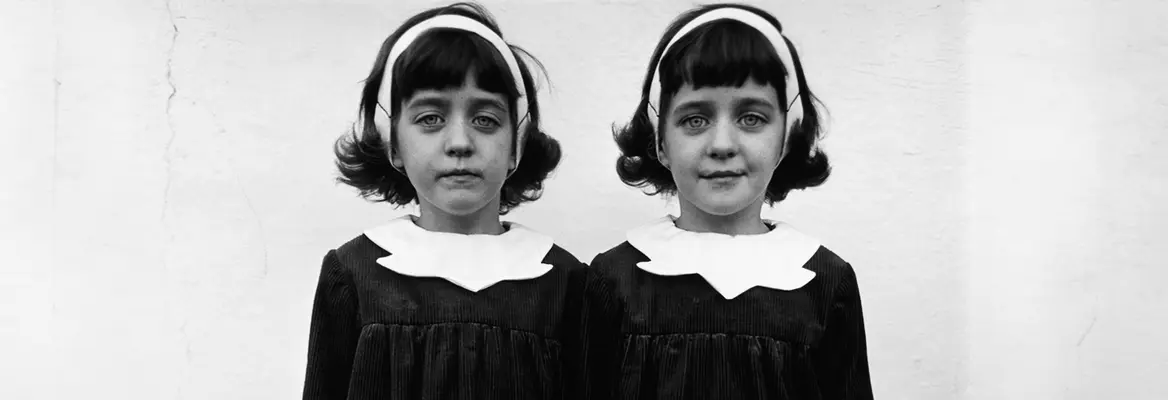
Twins and doppelgängers are disturbing because they pose a threat to our sense of personal identity and autonomy.
___
In "The Uncanny Valley," the roboticist Masahiro Mori hypothesised a relationship between the degree of a figure’s verisimilitude and the positive or negative feelings it elicits. As a figure becomes more lifelike, it elicits increasingly positive feelings of affinity, but only up to a point. Past a certain degree of lifelikeness, the effect of the figure changes into one of negative affinity or uncanniness: it falls into the uncanny valley. The only way out of the valley is to become virtually indistinguishable from a human being.
It is questionable whether it is always possible to escape the uncanny valley by becoming perceptually indistinguishable from a real human. Having the thought that something that appears just like a real human is not a real human seems uncanny enough. This is a possibility that advances in robotics and AI are bringing uncomfortably close to home. Yet there is a deeper assumption that Mori’s hypothesis rests upon that I want to call into question here: that ordinary, healthy human beings represent the antipode of uncanniness.
Want to continue reading?
Get unlimited access to insights from the world's leading thinkers.
Browse our subscription plans and subscribe to read more.
Already a subscriber? Log in
Love the iai?
Sign up to get exclusive access.

Related Posts:
Related Videos:


7th July 2026

Join the conversation