


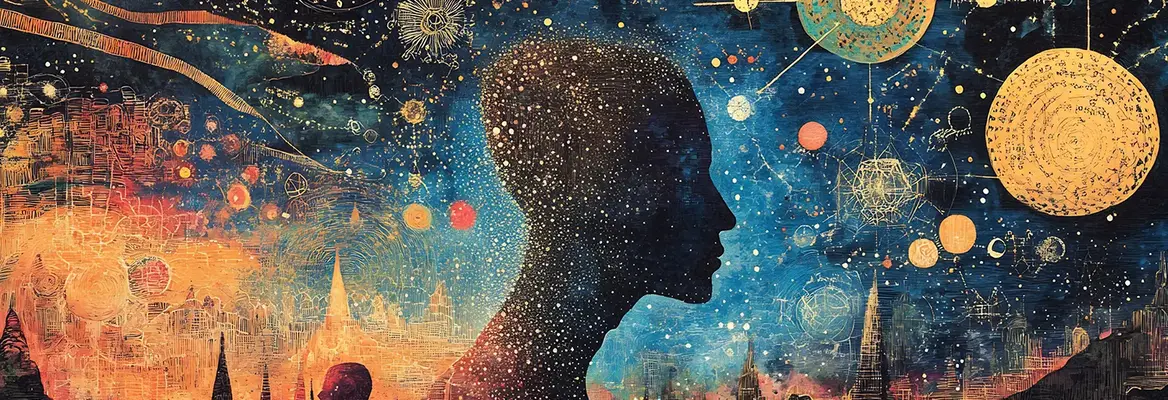

Theoretical physicist and neuroscientist Àlex Gómez-Marín argues that modern science has become trapped in a framework that mistakes matter for the whole of reality. In this wide-ranging interview, Gómez-Marín challenges the foundations of materialism, defends the scientific study of near-death experiences, and calls for a new type of science grounded in mystery and a renewed sense of the sacred. He suggests that abandoning materialism could open the door to a deeper understanding of consciousness, death, and the purpose of human existence.
Simon Custer: You are both a theoretical physicist and a neuroscientist, and you have also been fiercely critical of materialist theories of mind and consciousness. What do you think the ultimate nature of reality is?
Àlex Gómez-Marín: I don't know what the ultimate nature of reality is, but what I try to first assess is whether the stories that they [mainstream science] have told us about it are right, or maybe whether there are other alternatives. That's why I've been a fierce critic of materialism. As a scientist, I realized that they had sold us this idea that to be a good scientist you also had to subscribe to many other -isms, like materialism, reductionism, and even secularism. And so first I think one needs to unmount these -isms, and then, as is happening today in consciousness studies, we have a huge landscape where there isn't only one game in town, the idea that matter is the only thing that really exists. But because we are studying the hard problem of consciousness, it may be the case that other views of reality, like idealism, or even dualism, or other theories like dual aspect monism... these are philosophical ideas that now, I think, have room in science to be taken seriously.
How does something like materialism relate to dualism or idealism? What is materialism in the first place?
Well, materialism is the philosophical position that matter is the only really ‘real’ thing in the universe. And I think that worked kind of well because science started 400 years ago and Galileo made that split, I call it the foundational wound. It was a great business move.
He said, let's start doing science on that portion of reality that lends itself more easily to mathematization and measurement. So, for some reason, the solidity of this table or the movement of planets lend themselves very well to this foundational idea of science. But as time went on, 400 years later, we realized that we had forgotten the other side, which is what really matters.
What really matters is pain, is love, is feelings, sensation, consciousness, which is very hard to define, but very intimate. We all know what it is. It's that thing that disappears when we go into deep sleep and comes back in the morning.
 SUGGESTED VIEWING
On the edges of knowledge
With Michael Shermer, Rupert Sheldrake, Güneş Taylor
SUGGESTED VIEWING
On the edges of knowledge
With Michael Shermer, Rupert Sheldrake, Güneş Taylor
It's what it is like to be, as Nagel said. It's the feeling of being alive. So, materialism is good to study certain things, but then when it ossifies into this ideology and then is dressed like science, now it's preventing us from understanding these key questions that are really that everybody wants to know.
Why are we here? Why do we feel reality? Where do we go when we die? And so we need other ways. We need pluralism. I'm only asking for having more options on the table and taking them seriously.
Want to continue reading?
Get unlimited access to insights from the world's leading thinkers.
Browse our subscription plans and subscribe to read more.
Already a subscriber? Log in
Love the iai?
Sign up to get exclusive access.

Related Posts:

Related Videos:

Simon Custer
1st December 2025

Join the conversation
Themis Matsoukas 11 December 2025
We can’t figure consciousness and we will figure life after death? I don’t think so.
Jeffrey Anderson 7 December 2025
Very interesting interview.... thank you. .