We need a new American Dream for the age of AI

Universal basic income will be needed in AI abundance

25 11 05.American Dream.ata

At HowTheLightGetsIn London 2025, Aaron Bastani and Zoltan Istvan debated whether capitalism should be dismantled in an age of automation. As artificial intelligence transforms the foundations of work, we face the question of what will it mean to be human in a world of abundance. In this piece, Zoltan argues that we should reimagine the American Dream for the AI era. 


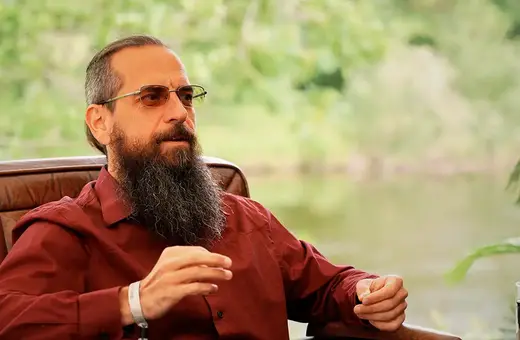
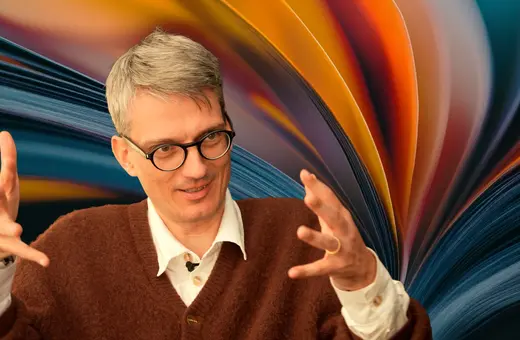
It was a windy autumn Saturday afternoon at London’s fabled Kenwood House when I found myself standing beneath a 300-person tent called The Ring at HowTheLightGetsIn. The crowd had packed in shoulder to shoulder, leaving hardly any space to move. You could feel the hum of anticipation in the air, the kind that happens when people know they’re about to witness a real exchange of ideas—an argument not about the past, but about the shape of the future. I was there to debate Aaron Bastani, the creator of Fully Automated Luxury Communism, and a man whose vision of the future, while sharing many of my premises, reaches different conclusions.

Along with some friends who are part of my California gubernatorial campaign, I’ve spent years developing what I call the Automated Abundance Economy, a framework that accepts that automation and artificial intelligence are rapidly changing the world. Machines and algorithms are becoming capable of doing nearly every kind of labor a human once did—from driving trucks to designing buildings to diagnosing diseases. In my view, this is an irreversible trend. The question isn’t whether automation will take over, but how we’ll adapt once it does. My answer, however, has never been to abandon capitalism right away. I believe capitalism, along with its flaws, is the engine that got us here—the system that incentivized innovation, rewarded risk, and built the infrastructure of technological progress. I want to hold onto capitalism as long as possible, because I believe it provides the creative fuel we still need to finish building the future. But I’m not naïve. I know that as automation spreads and abundance grows, capitalism will likely dissolve into something new—something more collective, more equitable, and yes, more left-leaning.
How transhumanism dangerously ignores human nature SUGGESTED READING How transhumanism dangerously ignores human nature By Omari Edwards  

Aaron Bastani sees that endpoint too, but he wants to leap straight to it. His philosophy of Fully Automated Luxury Communism imagines a society where automation and renewable energy make scarcity obsolete, and where the fruits of technology are distributed universally. For Aaron, capitalism is no longer a tool—it’s an obstacle. He argues that it’s time to dismantle the system, to build an economy based on access rather than ownership, on shared services rather than private wealth. In his vision, technology liberates humanity not only from labor but from the very structures of profit and competition that have defined modern life. He doesn’t just want progress; he wants justice, and he believes the two are now inseparable.

___

You could feel the hum of anticipation in the air, the kind that happens when people know they’re about to witness a real exchange of ideas

___

Listening to him speak and reading his plentiful journalistic writings, I could appreciate the appeal of that ideal. Who wouldn’t want a world where no one suffers from want, where automation and abundance free us all from the grind of survival? Yet I can’t ignore the danger in moving too fast. The drive to create, to compete, to strive—those forces have been central to human advancement. Capitalism, despite its inequities, channels those instincts productively. Abandon it prematurely, and we risk smothering the very fire that powers innovation. I worry that an overly bureaucratic or centralized system could stall progress, suffocating under the weight of its own good intentions. For me, capitalism is not sacred, but it’s still useful—a scaffolding that supports the transition toward post-scarcity. When abundance truly becomes self-sustaining, we can take that scaffolding down. But we should be very careful to not do so before.

Still, as much as Aaron and I differ on pace and philosophy, we find surprising common ground on certain essentials. We both know that automation will devastate the job market. Tens of millions of jobs, perhaps hundreds of millions, will vanish as machines outcompete humans in cost and efficiency. This is not speculative fiction; it’s already happening. The coming decades will demand a social and economic reimagining on a scale never seen before. Both of us believe that governments must step in—not to control innovation, but to distribute its benefits. That’s where our shared belief in a form of universal basic income comes in.

My version of UBI is simple: straight cash, directly to citizens, no strings attached. I believe people should have the freedom to decide how to use it—to start businesses, create art, or simply live their lives without coercion. Freedom, to me, is the core of what it means to be human. Aaron, by contrast, favors universal basic services. He imagines a society where the essentials—healthcare, housing, transportation, education—are provided freely to everyone as a right of citizenship. His approach ensures equity, mine prioritizes liberty. Both aim to soften the economic dislocation that automation will bring. And truthfully, both may end up necessary.

___

Tens of millions of jobs, perhaps hundreds of millions, will vanish as machines outcompete humans in cost and efficiency. This is not speculative fiction; it’s already happening.

___

The debate that day was cordial, more philosophical than combative. I’ve always admired Aaron’s intellect and conviction, even if I think he underestimates how messy human motivation can be. The audience, too, seemed less fixated on which of us was “right” and more absorbed by the enormity of the transformation we were describing. The real question wasn’t whether capitalism or socialism would prevail, but what kind of society humans could build when machines can do almost everything for us. I could sense that people were grappling with the same paradox I often feel myself: excitement for the possibilities of technology, and anxiety about what it will mean for meaning itself.

I told the audience that the challenge of automation isn’t just economic—it’s existential. If work has long been the backbone of identity, what happens when work disappears? In my run for California Governor traversing the state, I often speak about transhumanism—the idea that technology will soon allow us to transcend biological and mental limitations. But the first transcendence we may have to face isn’t physical; it’s psychological. How do we redefine purpose in a world where necessity is gone? Aaron believes that once material needs are met, humans will turn naturally to art, philosophy, and play. I agree that that possibility exists—but I also know the darker potential: boredom, stagnation, the erosion of drive. Progress doesn’t stop being important just because survival becomes easy. We’ll still need new frontiers—space exploration, longevity science, and creativity—to keep our species moving forward.

As the debate ended, the tent was warm and electric with conversation. Outside, the wind whipped through the trees, scattering leaves across the grounds of Kenwood House. People lingered, talking in small groups, weighing what they had just heard. Many didn’t seem to leave thinking about capitalism versus socialism so much as about the sheer scale of what’s coming.

___

How do we redefine purpose in a world where necessity is gone?

___

They understood, as I do, that artificial intelligence and automation will not just reshape economies—they will redefine what it means to be human. Whether we evolve carefully through systems that still reward innovation, or leap directly into collective abundance, the next century will force us all to rethink the basic assumptions of civilization.

I left the tent that day feeling oddly hopeful. Despite our differences, Aaron and I share a belief that technology can—and should—be used to elevate humanity. The challenge is managing that transition with compassion and foresight. We must build systems that preserve freedom, dignity, and purpose even as the machines take over the work. The future is coming faster than most realize, and it will not wait for us to agree on ideology before it arrives.

As I walked across the grounds, the sky beginning to darken with the onset of evening, I found myself thinking about the irony of it all. The crowd had gathered for a debate about automation, but what we were really talking about was human meaning. When machines can provide for every need, what will be left for us to do? The answer, I suspect, is really about reimagining what Americans like to refer to as the “American Dream.” This once meant achieving riches by hard work. But a new version, one which I’m advocating for, would mean achieving true luxury just by being human and born in the age of automation. Critics will say this leaves little room for purpose, but humans have rarely had a problem finding purpose. They find it in family, in religion, in art, in work (whether they’re paid or not), and in just the miracle of being alive. I don’t think people will have an issue with purpose; we’ll just have much more comfort and riches to strive for it all in.

Of course, such a dramatically different reality will define not just our sense of being, our politics, and our culture, but our very humanity. And with such great changes in store for humanity, that is why, even as I advocate for holding onto capitalism a little longer, I know that the ultimate goal—the true horizon—is a world where abundance frees us not just from labor, but from limitation itself. The world we are entering is going to be abundant and utopia-like. Humans will look back in a few decades’ time and barely even recognize who we are today.

Want to continue reading?

Get unlimited access to insights from the world's leading thinkers.

Browse our subscription plans and subscribe to read more.

Start Free Trial

Already a subscriber? Log in

Latest Releases
Join the conversation