


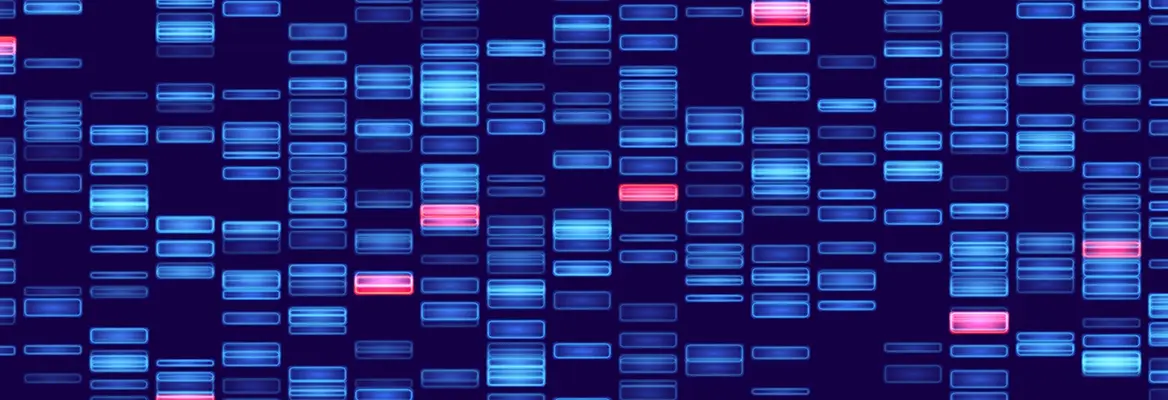

For most of human history, the origin of life was a religious question. Darwin made it a scientific one. But now scientists have created an artificial species designed entirely by artificial intelligence, inaugurating a new age in which life is a product of human engineering. Adrian Woolfson argues that generative biology—where genomes are written rather than discovered—will fundamentally change our lives, transforming medicine, agriculture, and even the nature of evolution itself.
On Friday, December 18, 1903, the London Herald reported that a flying machine had taken to the air the previous day. The Wright brothers, Orville and Wilbur, had made the first controlled and sustained engine-powered flight in their aircraft, the Wright Flyer.
The flight at Kill Devil Hills, North Carolina, lasted just twelve seconds, and the aircraft traveled only 120 feet. Yet in that brief interval, the brothers had demonstrated that heavier-than-air flight was possible. In doing so—and in a triumph of the human imagination—they inaugurated the age of aviation.
Twenty-eight years later, Wiley Post and Harold Gatty circumnavigated the globe in around eight days. The subsequent invention of jet engines made commercial flight routine, facilitating intercontinental connectivity, globalization, and mass air travel. Aviation also laid the foundations for the eventual conquest of space.
___
For the first time in life’s approximately four-billion-year history, evolution by natural selection has a competitor: life designed by a computer.
___
Nearly a century and a quarter after the first airplane tentatively lifted off from the ground, in an event that passed largely unreported, biology has experienced its own Wright brothers moment. A new and rudimentary form of life has gently bumped off the runway, offering humankind a glimpse of the vast biological possibilities that exist beyond nature.
At the Arc Institute at Stanford, California, on September 17, 2025, Brian Hie and his colleagues—including Samuel King—announced that they had created the first synthetic species designed entirely using artificial intelligence. For the first time in life’s approximately four-billion-year history, evolution by natural selection – previously the only mechanism capable of designing species—had acquired a competitor: life designed by a computer.
We have, as a result, been propelled into a post-Darwinian world that we currently only partially understand and are poorly equipped to navigate. If carefully explored with diligence and caution, it promises substantial benefits and the potential to preserve natural species and habitats. But if mismanaged, it could cause serious harm.
This unprecedented moment represents a phase transition not just for humankind but for the entire history of life on Earth. Hie and his colleagues have devised an entirely new mechanism for generating living things. In doing so, they inaugurated the age of AI-driven genome design. Life will never be the same again. Rather than passively cataloguing species, humankind can now play an intentional role in life’s creation.
Biology is transitioning from a descriptive science into a creative, generative one. Genomes have ceased to be historical records alone and have become a writable language, with humans— assisted by AI—acquiring a new authorial role. While species were once exclusively facts about the world, some are now becoming decisions about the world.
Unlike evolution by natural selection, which lacks foresight and intentionality, this artificial mode of species generation is deliberate, purposeful, and directed. It constructs biological entities according to pre-specified aims.
Rather than being tested solely in the real world, artificially generated species can first be simulated on computers. Following virtual evaluation through artificial selection, preferred versions can be realized in the physical world through human-mediated construction.
___
Want to continue reading?
Get unlimited access to insights from the world's leading thinkers.
Browse our subscription plans and subscribe to read more.
Already a subscriber? Log in
Love the iai?
Sign up to get exclusive access.

Related Posts:


Related Videos:


7th April 2026


Join the conversation
Themis Matsoukas 16 April 2026
“ Unlike evolution by natural selection, which lacks foresight and intentionality, this artificial mode of species generation is deliberate, purposeful, and directed.”
We need to pause for a minute to ponder what it is that the above claims: purposeless nature produces a creature that brings purpose to nature. What logic sustains this sentence?