


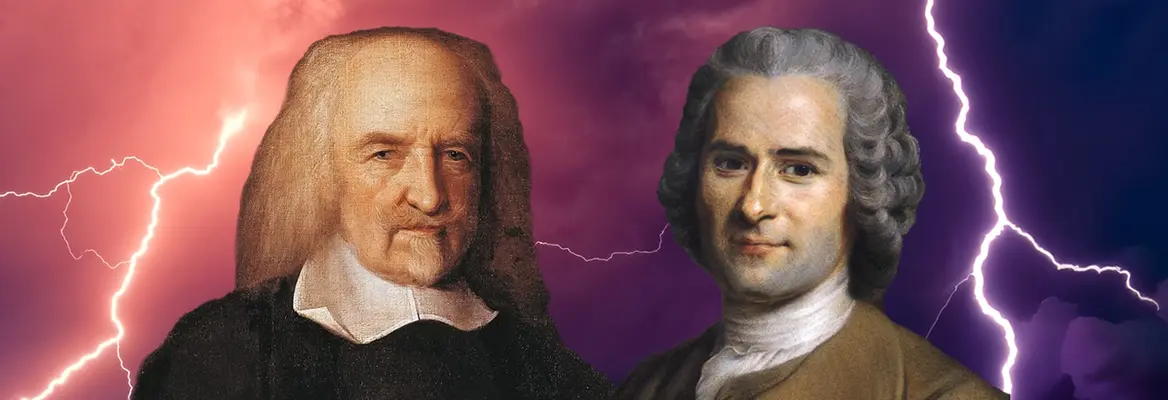
Since the great debate between Hobbes and Rousseau, our political theory has been organised around a single question: is human nature essentially good or essentially corrupt? Graham Harman, the philosopher behind object-oriented ontology, argues that this is simply the wrong question to be asking. The real forces governing our collective fate - climate change, artificial intelligence, geography, and pandemics - are non-human; therefore, questions about human nature are not the central ones. Instead, Harman proposes a politics reorganised around our relationship to non-human objects and environments, in which quasi-government institutions incentivise and deter actions with the aim of extending the survival of the human race.
“It is easier to imagine the end of the world than the end of capitalism.” This has become one of the most popular phrases among twenty-first-century intellectuals. Often misattributed to Fredric Jameson, it has been warmly embraced by such influential authors as Slavoj Žižek and the tragically departed Mark Fisher, and has fueled the notion that the major problem with the political Left is that it simply needs to become more speculative and creative. Naturally, this is never a bad idea in any human pursuit. But what if the political distinction between Left, Right, and Center itself results from a failure of imagination?
 SUGGESTED READING
Hobbes vs Rousseau: are we inherently evil?
By Robin Douglass
SUGGESTED READING
Hobbes vs Rousseau: are we inherently evil?
By Robin Douglass
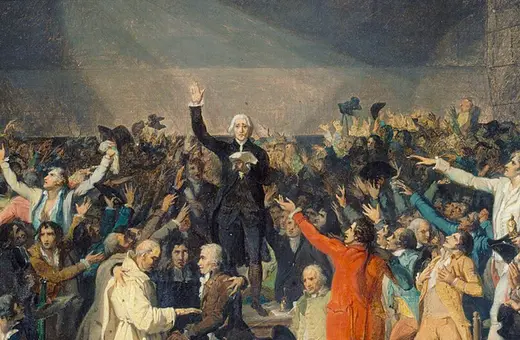
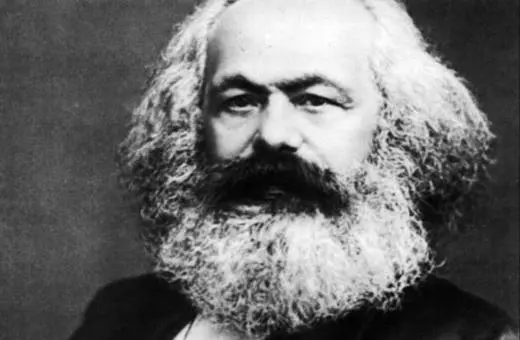
This particular division has been with us only since the summer of 1789. During the simmering prelude to the French Revolution, it referred originally to the physical position in the National Assembly of radical figures on one side and loyal monarchists on the other. These positions are linked with two entirely different camps of modern political theory. On the Left we find a series of authors ranging from the moderate (Locke) to the supercharged (Rousseau) to the truly radical (Marx), all of them contending that exploitation of the many by the few justifies revolutionary overthrow of the existing order. On the Right they are countered by the likes of Machiavelli, Hobbes, and Schmitt, a group of thinkers convinced that corrupt human nature can be tamed only by force. In the words of the Nazi supporter Schmitt: “One could test all theories of nature and state and political ideas according to their anthropology and classify these as to whether they consciously or unconsciously presuppose [humans] to be by nature evil or by nature good.” This is the division we continue to face today, even in the daily retail politics of Western democracies.
___
Our species has regularly proven itself capable of both the noblest gestures and the most scathing cruelties, making it hard to define us as essentially either emancipatory or brutal in our aims.
___
Want to continue reading?
Get unlimited access to insights from the world's leading thinkers.
Browse our subscription plans and subscribe to read more.
Already a subscriber? Log in
Love the iai?
Sign up to get exclusive access.

Related Posts:
Related Videos:
30th July 2026
Join the conversation
James Pangborn 31 July 2026
On the one hand, human nature is unfathomably complex, and its inevitable oversimplifications have always led us down ideological rabbit holes. On the other, greed, anger, resentment, and egotistical folly seem to dog us no matter what we try to do about it. The nature of What There Is might well guide us better, but the same concatenation of incomprehensible vastness and vulnerability to manipulative interpretation applies. Object-orientation still entails subjectivity, no matter that Things As They Are don't double back on themselves that way. How do we get around that?