


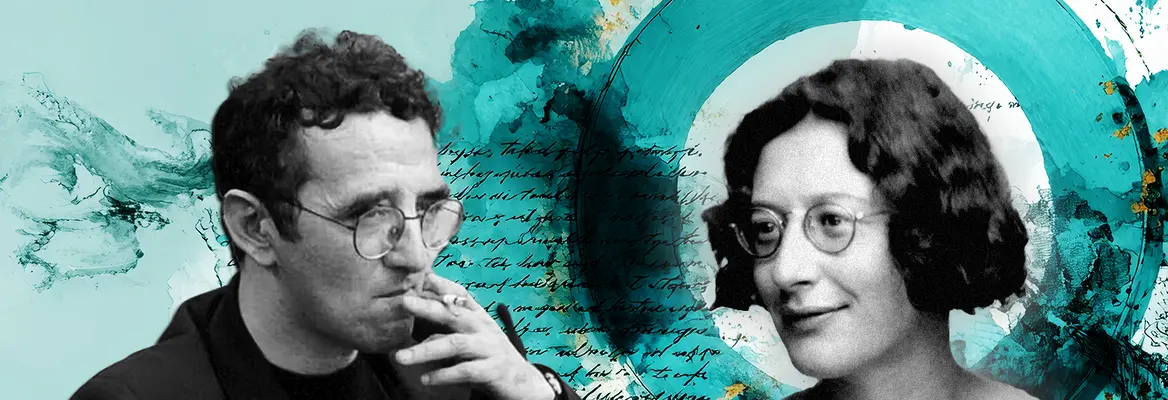

We are a culture obsessed with covering up pain. From painkillers to doomscrolling, we treat anything uncomfortable as a problem to be solved. Finn Janning, a philosophical counselor and essayist, argues that we should embrace discomfort as a central part of being human. Looking to the great Chilean author Roberto Bolaño and to the ethics of Simone Weil, he contends that only by focusing on real suffering can we live ethically and connect emotionally with each other.
We are a culture obsessed with covering up pain. From painkillers to doomscrolling, we treat anything uncomfortable as a problem to be solved. Finn Janning, a philosophical counselor and essayist, argues that we should embrace discomfort as a central part of being human. Looking to the great Chilean author Roberto Bolaño and to the ethics of Simone Weil, he contends that only by focusing on real suffering can we live ethically and connect emotionally with each other.
In an interview, the Chilean writer Roberto Bolaño (1953 – 2008) stated: “The library is a metaphor for human beings or what's best about human beings, the same way a concentration camp can be a metaphor for what is worst about them. A library is total generosity.”
The secret behind the poetic and imaginative power of Bolaño’s work lies in a rare synthesis of radical attention and generosity—an affirmative practice. He does not merely reflect life; he expands it, turning existence itself into art.
___
Bolaño is using fiction to create a space where what cannot be conceived is confronting us. This is painful. This is real.
___
When Bolaño turns life into art, I am not referring to life in general but to a life understood as a particular form of existence or way of living. The most illustrative example is the novel 2666, where he, in the fourth part, called "The Part About the Crimes," with shocking precision, describes how numerous young girls and women were mutilated and killed in Santa Teresa in Mexico (i.e., Ciudad Juárez). For instance, he writes: ”Two weeks later, in May 1994, Mónica Durán Reyes was kidnapped on her way out of the Diego Rivera School in Colonia Lomas del Toro… She was twelve years old… According to the forensic examination, she had been raped and strangled."
For more than 200 pages, the horror goes on. Through Bolaño's painful precision, life appears richer. Without pain there is no reality. Or as the French philosopher Simone Weil writes in her Notebooks: “Pain as evidence of the actual existence of the world.” This contrasts with today’s society where nothing should hurt and where pain, often, is comforted through various forms of consumption, entertainment and pills. Often with the result that we become addicted to the pleasantness without exploring the pain underneath.
Despite the violation, mutilation, and killing, Bolaño uses these destructive facts to awaken our mutual responsibility. The detailed description activates the reader's senses and confronts the reader with the fact that they live in a world filled with unsolved femicides. Or to put it differently: Where everything is pleasant, nothing is real.
Want to continue reading?
Get unlimited access to insights from the world's leading thinkers.
Browse our subscription plans and subscribe to read more.
Already a subscriber? Log in
Love the iai?
Sign up to get exclusive access.

Related Posts:
Related Videos:

6th November 2026


Join the conversation