


Creativity is everywhere: demanded by employers, schools, politicians, and now algorithms. But when it is framed as a skill to be optimized and monetized, it risks losing the radical power that once made it transformative. Oli Mould, author of Against Creativity, argues that real creativity is not about constant innovation or productivity, but about imagination, refusal, and collective change, and that reclaiming it may be one of the most urgent political tasks of our time.
Being “creative” is now essential. That is, if you view it through the lens that has been created (and curated) for us by the political and economic orthodoxy of the last half a century. Specifically, I like to draw that line in 1997 with the landslide election of Tony Blair as the UK prime minister, in that it created the now internationally-recognized remit of the “creative industries” as an economic and political entity—but the lens was being crafted well before then by the Thatcherites, let’s be honest.
This lens, that is now all-pervasive, refracts creativity—a deep human trait that has pushed through the arc of history and civilization—through capitalist relations, narrating it as an important “skill” that will advance your career, the economy, the country. Creativity, through this lens, becomes a personal and social necessity. It is a character trait that can be asked for at a job interview, a word that can be dropped into a policy document to secure government funding, a narrative to mask ongoing gentrification, or a stick to beat underperforming public institutions with. Viewed this way, creativity is an obligation: if you aren’t creative, then you’re left behind.
But such a view of creativity is not only reductive, it’s damaging. For much of human history, creativity was imagined as the spark of change; it was Archimedes in his bathtub, Al-Khwarizmi inventing algebra, Shakespeare writing Henry VI, or even Rosa Parks refusing to sit at the back of the bus. It was the spark that allowed us to leap forward out of the status quo, to challenge conventional orthodoxies in science, literature, politics, and art. Creativity was what artists, misfits, activists, and rebels used to prise open the cracks of the dominant and oppressive operating system of society (be that religious, economic, or political) and slip through into something freer.
___
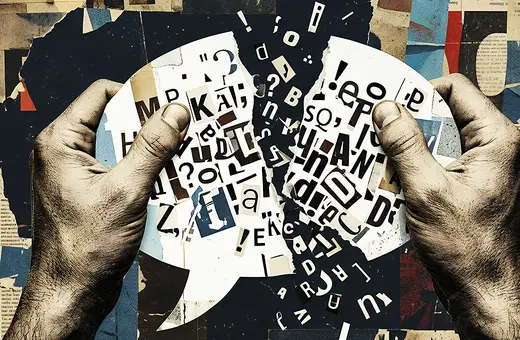
The more creativity becomes whatever can be captured, measured, or monetized, the more it loses the capacity to unsettle power.
___
But today, the lens that has been created by late capitalism that refracts creativity through purely economic orthodoxies means that “creativity” hasn’t just lost its oppositional edge, it’s been cannibalized by the status quo itself. From primary schools to corporate boardrooms, from the gig economy to the rhetoric of political campaigns, creativity has been conscripted as the soft power of contemporary capitalism. It is no longer a mode of refusal. It is a metric of productivity.
Students must “be creative” to stand out in assessment regimes designed to standardize them. Workers are told to innovate, always innovate, whether they are designing user interfaces or drafting emails or producing content for platforms that will absorb their labor and reward them with algorithmic indifference. Even our leisure time is colonized by creative self-improvement: side hustles, personal brands, craft practices that must be shareable, marketable, optimisable. What once felt like liberation now feels like homework.
Want to continue reading?
Get unlimited access to insights from the world's leading thinkers.
Browse our subscription plans and subscribe to read more.
Already a subscriber? Log in
Love the iai?
Sign up to get exclusive access.

Related Posts:
Related Videos:
4th February 2026


Join the conversation