



Our biology is central to our survival. This is the evolutionary story and one we take to apply to all living beings equally. However, biologist, anthropologist, and UN and WWF consultant, Jonathan Loh, argues that humans are special in a fundamental way. In this article, he proposes the radical new idea that the transmission of cultural characteristics is more important for human survival than biological ones. We pass down our cultural traits using language, which allows us to transcend our ancestry and reach beyond our tribes.
The peculiar primate
By any measure, Homo sapiens is an exceptional species. The world’s 8.3 billion humans collectively weigh around 400 million tonnes, while all wild mammals combined make up only about 60 million tonnes. And if we add domesticated animals to our side of the scales, we plus our domesticates outweigh wild mammals by a factor of 17.
But, millions of years ago, hominins were very rare. We know this from the number of hominin fossils that have been found compared with fossils of other mammal species of the same age. What was it in our evolutionary history that led to the vast disparity in population and biomass between us and other animals today? Is it just that we’re smarter—did our large brain give us global dominance? Not entirely—I’d argue that intelligence wasn’t so much the cause as a side effect.
Something quite extraordinary happened early in the evolutionary history of humans. Our ancestors 3 million years ago were apes, not much bigger than chimpanzees or bonobos—our closest living relatives—and at least as intelligent. They almost certainly used tools, just as modern chimps do. But chimps and bonobos are forest dwellers, subsisting mainly on a diet of fruit. Our ancestors lived at a time when the world was cooling and the African rainforests were shrinking. They survived by scratching out a living on the woody savannah surrounding the forest, foraging for edible plants and occasionally scavenging some meat. They spent less time climbing and more time walking—on two legs rather than four.
The human superpower
And then, some time between 3 and 2 million years ago, the earliest humans—hominins of the genus Homo—underwent the most significant evolutionary transition of any species since the origin of life on Earth. Up until that point, evolution had produced species that were adapted to survive and reproduce in their environment through the action of natural selection. Natural selection operates on variations between individuals within a population that can be inherited by genetic (and epigenetic) mechanisms—the fittest pass on to their offspring those traits that helped them survive and reproduce successfully; those that don’t survive, don’t. And evolution continues to operate that way in the natural world.
But among early humans, their way of adapting to survive and reproduce in the dangerous and hostile environment of the African savannah began to shift from biology to culture. What do I mean by this?
___
As people ventured north from the tropics to cooler temperate regions, they didn’t re-evolve the fur they had earlier lost; they made clothes.
___
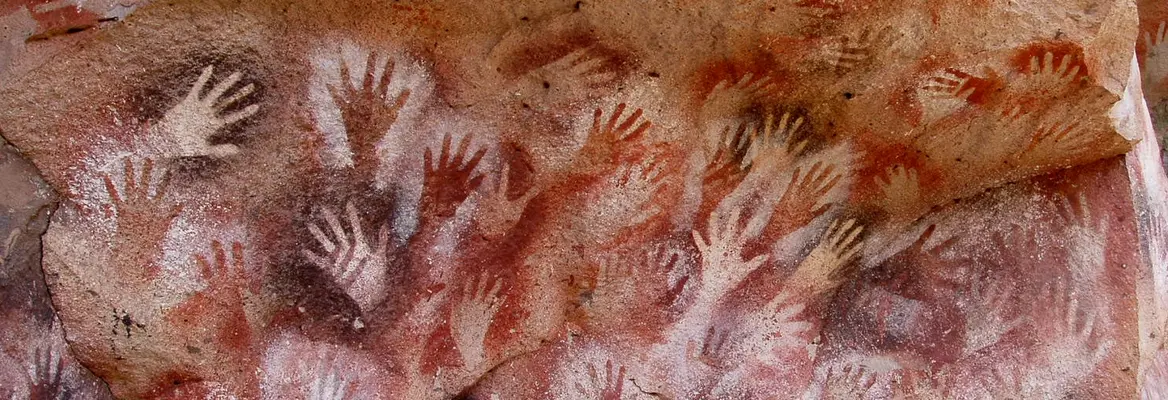
Culture isn’t just art, music and literature; it’s much more than that. Ways of dressing, cooking, speaking, religious beliefs, games, ceremonies, and customs are all elements of culture. Cultures are made up of traditions. These include any kind of behavior, practice, technology, knowledge or belief that’s not innate, but learned from others. They’re transmitted socially, not genetically. Some socially learnt behaviors are copied for a while, then forgotten; but others persist. A set of traditions transmitted from generation to generation within a social group constitutes a culture.
Want to continue reading?
Get unlimited access to insights from the world's leading thinkers.
Browse our subscription plans and subscribe to read more.
Already a subscriber? Log in
Love the iai?
Sign up to get exclusive access.

Related Posts:
Related Videos:
9th November 2026

Join the conversation