


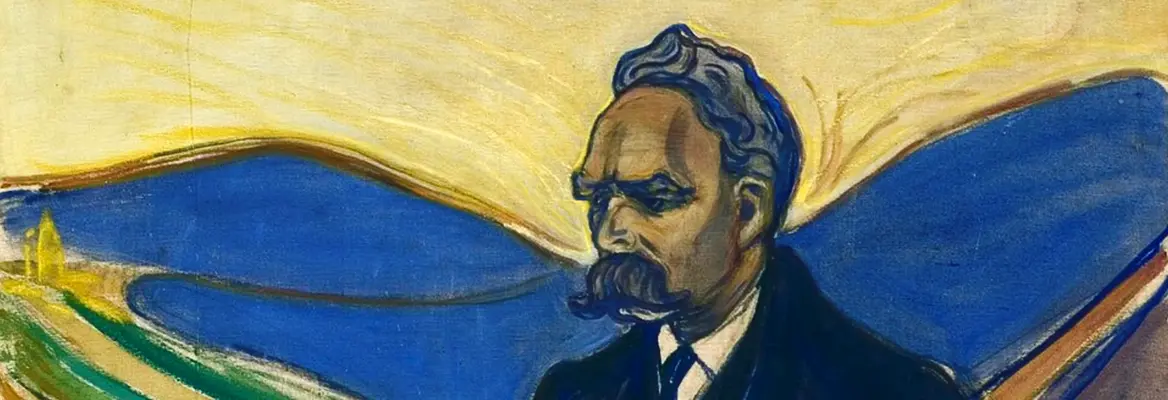

Friedrich Nietzsche is often seen as the prophet of anarchic relativism. His notorious claim that "there are no facts, only interpretations" appears to license a world of competing narratives and alternative facts. But did Nietzsche think that anything goes? In this article, Kathleen Higgins revisits his perspectivalism and his debt to Immanuel Kant, arguing that Nietzsche did not abandon truth but reconceived it. By recognizing the inescapable role of human perspective, he calls not for relativism, but a deeper and fuller objectivity which tests our interpretations against evidence and against one another.
We often hear that we live in a post-truth era. As opposed to a time when disagreements mostly concerned what to do in light of the facts, now people disagree about the facts themselves. And it is hard to deny that polarization is widespread in many places, with little evidence that those with conflicting views are attempting to understand their opponents’ positions. Many find it all too easy to consider their political rivals insensitive to reality and willing to spread lies to achieve their objectives. From there, it is an easy step to abandon efforts to negotiate on policy or even to have civil conversations with those of a different opinion.
Friedrich Nietzsche is often mentioned in connection with current political problems, whether with reference to his theory of will to power, his denial of traditional theories of truth, his critique of democracy, his elitism, or some combination of the above. His writings present challenges for interpreters, not least because they are unsystematic and filled with assertions followed by reconsiderations. But Nietzsche’s gift for catchy one-liners leads many to think his views can be encapsulated in a few statements, and often disturbing ones at that.
Thus, several of his quotable statements sound as though he thinks facts are unimportant. Most of these, we should note, are comments written in notebooks, not published claims. But we do find a number of notebook comments to the effect that there are no facts, but only interpretations. Does this mean that he thinks we only have “alternative facts,” vying interpretive claims that are equally justified? Hardly.
___
We cannot, as Nietzsche puts it, subtract the human contribution from the facts as we know them. We cannot directly compare our statements with external reality to see if they correspond.
___
What can we even make of the claim that we only have interpretations? What could be interpreted, if not the “facts” as one encounters them? One of Nietzsche’s notebook comments even says as much: “There are no ‘facts-in-themselves,’ for a sense must always be projected onto them before there can be ‘facts.’”
In referring to “facts-in-themselves,” Nietzsche reveals himself to be an intellectual heir of eighteenth-century philosopher Immanuel Kant. Kant maintained that human beings do not have direct knowledge of reality as it is in itself. We don’t know the “thing-in-itself.” Instead, our mental faculties integrate and structure the information that we take in through our senses, and what we “know” of reality is always formatted by our faculties. Given that human beings all have the same mental faculties, according to Kant, the formatting our minds supply to what the senses perceive is standard across the species. But whatever “truths” we know are only humanly formatted truths. We cannot, as Nietzsche puts it, subtract the human contribution from the facts as we know them. We cannot directly compare our statements with external reality to see if they correspond.
Want to continue reading?
Get unlimited access to insights from the world's leading thinkers.
Browse our subscription plans and subscribe to read more.
Already a subscriber? Log in
Love the iai?
Sign up to get exclusive access.

Related Posts:



Related Videos:



17th February 2026


Join the conversation