


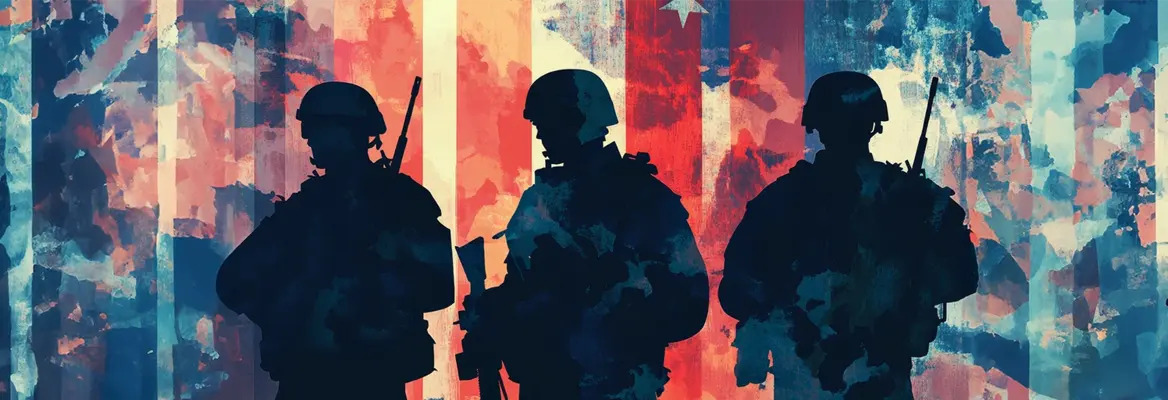

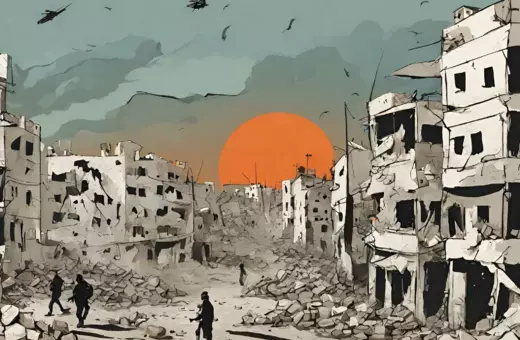
The US’s National Security Strategy document lays out the Trump Administration’s guiding principles for the new world order. Drawing on the Monroe Doctrine, the Western Hemisphere, including Greenland, Canada, Mexico, and Central and South America, the US claim, is the US’s to expand into and enlist – recent actions in Venezuela display this theme already being actioned. Furthermore, Europe, the Trump Administration suggests, will no longer be seen as a close or important ally. The document, and the actions already carrying it out, lay the way for a decade of geopolitical upheaval and a new carving up of the world between the great powers across their spheres of influence. Former intelligence officer in the British Army, Andy Owen, outlines the geopolitical themes that will define 2026 and that will shape the next decade.
The End of Ideology?
With the rise of American hegemony at the end of the Cold War, Western liberal democracy was seen by its high priests as the final destination on the journey to find the universal best way to organise a society (regardless of its historical and cultural uniqueness). We had gone beyond competing ideologies. Al Qaeda's religious fundamentalism and the ethno-nationalist wars in The Balkans were seen as the death throes of old ideologies rather than the return of ideologies that we never left behind. The failure of the US to "democratise" Iraq and Afghanistan, followed by the financial crash, escalating inequality and the rise of competing systems of governance in China and the rise of an aggressive Russian imperialism, shattered the illusion that with liberal democracy we had reached the "end of history."
At the same time, it became clear that globalisation had not just stripped communities of jobs but also what defined them. It replaced it with a secularised homogeneous culture they could only afford through debt, and left them governed by political parties they could no longer differentiate between. Into this vacuum of hope and aspiration came politicians who knew the easiest ideology to sell in such circumstances is a negative nationalism fueled by a politics of grievance that acts as a mechanism to turn humiliation, frustration and a sense of being left behind into anger and resentment against “others.”
___
In 2026, Europe must rouse itself to the reality that it is no longer in the American sphere of influence.
___
One such politician is Donald Trump, who surged to victory in 2024’s US presidential election with his American brand of negative nationalism. At the end of 2025, he launched his government’s new National Security Strategy (NSS), which outlines how his foreign policy will support his domestic agenda in his second term. It claims, “It is not grounded in traditional political ideology. It is motivated above all by what works for America - or, in two words, “America First.”” This is not an idealist foreign policy, that emphasizes moral values and cooperation, fighting for a peaceful, just world through international institutions, democracy, and human rights (many peoples around the world who have been on the end of American interventions since 1945 would argue, with some cause, that the US has never been an exemplar of idealism in its foreign affairs). Nor is this a grand ideology that sets out an economic or political worldview and demands others follow, such as the destructive fascist and communist ideologies of the twentieth century. It is a form of political realism with crude aims that builds on Trump’s America First domestic agenda.
Want to continue reading?
Get unlimited access to insights from the world's leading thinkers.
Browse our subscription plans and subscribe to read more.
Already a subscriber? Log in
Love the iai?
Sign up to get exclusive access.

Related Posts:


Related Videos:

9th January 2026


Join the conversation