


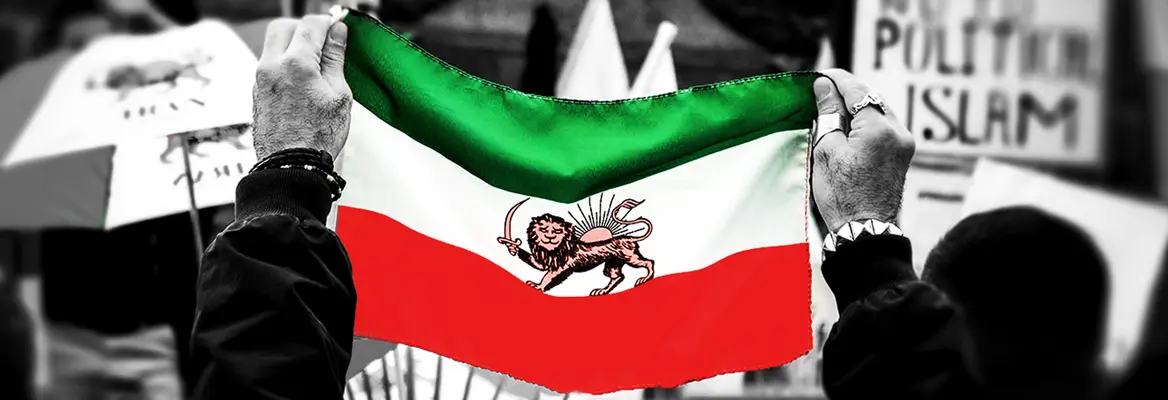

Many on the Western Left have been silent on recent events in Iran. Some have even openly supported the Islamic Republic as a bulwark against Western imperialism, downplaying domestic coercion as the price necessary to counter Western aggression. But according to philosophers Patrick Hassan and Hossein Dabbagh, this is a fundamental mistake. Treating Iran as an anti-imperialist force fails to recognize that in foreign affairs Iran, like all other states, acts not on behalf of lofty anti-imperialist principles but according to hard-nosed realism. And even on its own terms of countering Western influence and retaining sovereignty, Iran has failed. The Left rightly denounces Western repression at home and abroad, Hassan and Dabbagh argue, and it’s time to denounce it in the case of Iran.
The Islamic Republic of Iran is currently undergoing one of the most significant periods of domestic turmoil since its inception in 1979. At the time of writing this, credible tallies suggest a vastly higher death toll than the regime admits. More than 6,000 killings have been verified, with a further 17,000 recorded deaths under investigation, implying a possible total of around 22,000. The regime has imposed a near-total digital blackout lasting over 400 hours. These protests began with strikes by the merchant class centered in the bazaars upon yet further increases to inflation in an already crippled economy, but have since ignited apparent broader dissatisfaction with the governing clerical powers among more workers’ unions and the broader population. Popular chants across Iran’s major cities have indicated this: “Death to the Dictator,” “Death to [Ayatollah] Khameini,” Iran’s current Supreme Leader, and “Until the Mullah is buried, this homeland won’t be a homeland.”
Progressive factions within the Western Left that have rightfully spoken up for the struggles of Palestinians facing Israeli aggression have, nevertheless, either been curiously silent on recent events in Iran, or have been open in their support of the Islamic Republic. Prima facie, the latter faction is especially puzzling. The Islamic Republic’s governance is characterized by autocratic rule in a theocratic framework that has overseen an increasingly stratified society with massive wealth disparity.
___
The more fundamental philosophical issue is not partisan at all. It is a recurrent pathology of political judgements.
___
Aside from an elite ruling class riddled with corruption scandals, the Islamic Republic has a plethora of documented human rights abuses, including but not limited to the imprisonment, torture and execution of dissident journalists, environmentalists, union leaders, religious and ethnic minorities, and individuals (usually women) who are considered to have flouted the preferred religious norms of the dominant class. Practices which are routinely (and rightly) protested against in Western liberal societies are often excused by the Left in the case of Iran, and practices that many on the Left rightly condemn when carried out by Western-aligned regimes are frequently minimized, relativized, or rationalized in the Iranian case.
That asymmetry is the puzzle this article begins from: why does a movement whose moral vocabulary is supposedly anchored in anti-domination and solidarity so often suspend those commitments when the agent of domination presents itself as “anti-imperialist”? And, crucially, what, if anything, could justify that suspension?
Want to continue reading?
Get unlimited access to insights from the world's leading thinkers.
Browse our subscription plans and subscribe to read more.
Already a subscriber? Log in
Love the iai?
Sign up to get exclusive access.

Related Posts:


Related Videos:


Patrick Hassan
30th January 2026



Join the conversation