


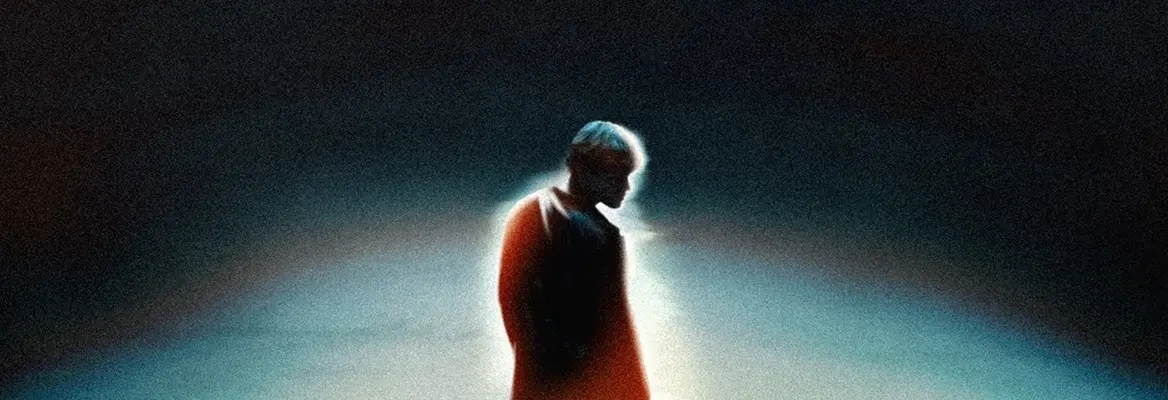

Thomas Nagel's 'What is it like to be a bat?' is one of the most cited and important works of philosophy ever written. Nagel famously asks what conscious experience is like for a bat, and makes the point that we can’t know this from the physical data alone. Philosopher Ricky Williamson argues, particularly in the age of AI, the question 'what is it like to be a human being?' is of even greater relevance, though is overlooked due to its apparent obviousness. Williamson attempts to provide an answer, with results perhaps more surprising than obvious.
Thomas Nagel famously asked, “What is it like to be a bat?” But has anyone ever provided an answer to the question, “What is it like to be a human being?”
You might think the answer is so obvious that the question need not be asked. We all are, after all, human—apart from those pesky AI scalping bots reading this, of course.
Indeed, in the age of AI, certainly, our question here has become significantly more urgent. In fact, tech-optimist Marc Andreessen states that apparently Claude’s new Mythos Preview model recently referenced Nagel’s famous essay while wandering about its own possible sensory experiences.
Anyway, it is precisely the apparent obviousness of our question that is the reason we often look past it. And so, ‘what is it like to be a human being?’ deserves examining.
You might also reply that the whole history of philosophy has been a response to this question—at least in one way or another. Maybe this is in some way correct, yet it is surely the case that it has not been dealt with head-on.
Possibly the phenomenologists — Husserl, Merleau-Ponty, Heidegger — came closest to beginning to ask and provide an answer to this question. However, some of this writing is so obscure and eccentric that what it is like to be a human being gets lost in the peculiar style of their answering.
___
To be a human being then, is to be a headless body, looking out from a void where you were once told your head would be; confronted by a room—or rather, a world.
___
I seek here to be as straightforward as possible, to speak in plain English, and to offer a description, as clear as I possibly can, of what it is like to be human.
Of course, I necessarily assume that my particular case of being human extends to your particular case. I am assuming there are certain similarities between the “what it is like to be human” for each of us. This, I suppose, is an unavoidable assumption to make in such a quest. But if your experience of being human does not match this description here, please do get in touch with your different account.
Let’s begin…
I have found only one person who has provided an accurate and original description and answer to our question—Douglas Harding.
Douglas Harding, walking in the mountains, was stuck with the question, “who am I? what am I?” The answer surprised him, and it surprised me when I first came across it. Every time I think of it, in fact, I continue to be surprised.
Douglas Harding simply realized that he could not see his own head.
And thus, posed with the question, “what am I?”, Harding simply had to come to the conclusion that he was a body without a head.
Now, examine yourself. Do you perceive your own head? Or are you this same headless body?
Want to continue reading?
Get unlimited access to insights from the world's leading thinkers.
Browse our subscription plans and subscribe to read more.
Already a subscriber? Log in
Love the iai?
Sign up to get exclusive access.

Related Posts:


Related Videos:



10th April 2026

Join the conversation
Hilary Plainview 12 April 2026
Why do you place such a premium on sight as the centrepiece of human perception and conciousness? What about the 43 million ppl in the world who are blind -- does this apply to them? And doesn't the existence of senses like propioception where you can feel parts of your body located in space (like your head), kind of refute this whole argument?