


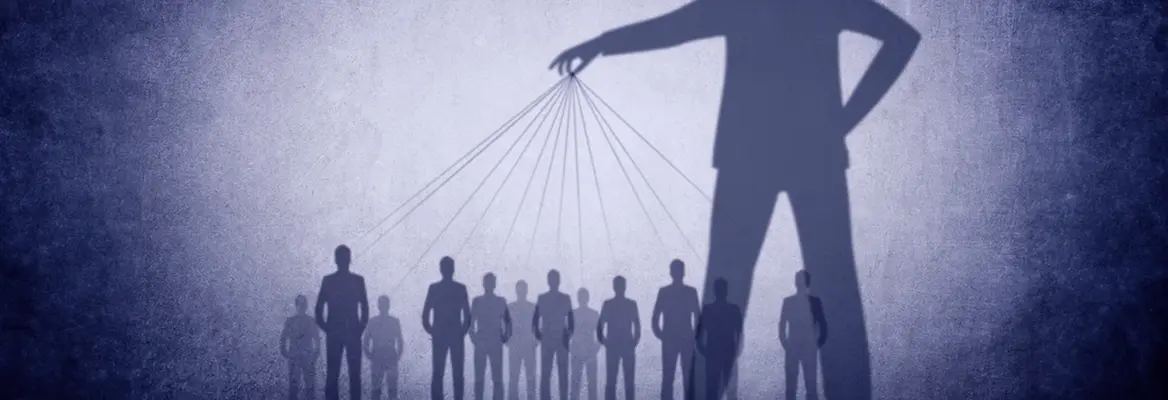

Most see 9/11 conspiracies as an aberration in American political life. But historian Andrew McKenzie-McHarg, author of The Hidden History of Conspiracy Theory, argues that there’s nothing surprising here. Through investigating the genealogy of conspiracy theories, he argues that we can come closer to understanding when to reject them as apocalyptic demonologies in secular garb or take them seriously as credible possibilities in criminal or journalistic investigations.
As the day of September 11, 2001 drew to a close, one thing felt certain amid all the uncertainty: nothing would be the same again. However, a full quarter-century has passed since the events of that day. A distance in time of this magnitude opens up new perspectives. In particular, it becomes possible to appreciate how the terrorist attacks mark less a radical before-and-after moment and instead find their place within a long-term continuity. This is the case if one considers the numerous conspiracy theories that emerged in the months and years after the attacks. Proponents and advocates of these theories came to be known collectively as the “truthers,” though in fact they could have been more accurately labeled as “doubters”; instead of agreeing upon a truth, they bonded over a radical doubt about the official version of events. Nineteen al-Qaeda operatives hijacked passenger planes, transforming them into missiles directed at nodal points of American political and financial power? According to the truthers, that was simply what the authorities wanted you to believe.
Conspiracy theories have been with us for a very long time. Exactly how long is hard to determine—the answer to that question depends on how one defines a conspiracy theory. Yet questions of definition diminish in importance if one instead tries to craft a genealogy that looks at the various ingredients of a conspiracy theory. One such ingredient is a profound sense of the presence of evil in the world. In this regard, 9/11 conspiracy theories occupy an intermediate position in the history of this mode of interpretation. This becomes apparent if one recalls how, from the late 1960s, skepticism about the official version of how President Kennedy was assassinated in Dallas in 1963 congealed into suspicions that the CIA might have played a part in the crime. More recently, we have been witness to the QAnon movement fantasizing about a cabal that had lodged itself deep within the government and that routinely engaged in unspeakable abominations. The 9/11 conspiracy theories that railed against the ruthlessness and cynicism of the administration led by President George W. Bush sit somewhere in the middle when it comes to the depth of wickedness they posit: more than a rogue branch of an intelligence agency but less than an irredeemably depraved deep state.
___
My efforts at piecing together this story located two sites where the term originated and thus revealed a forked genealogy.
___
Want to continue reading?
Get unlimited access to insights from the world's leading thinkers.
Browse our subscription plans and subscribe to read more.
Already a subscriber? Log in
Love the iai?
Sign up to get exclusive access.

Related Posts:



Related Videos:



9th October 2026



Join the conversation