


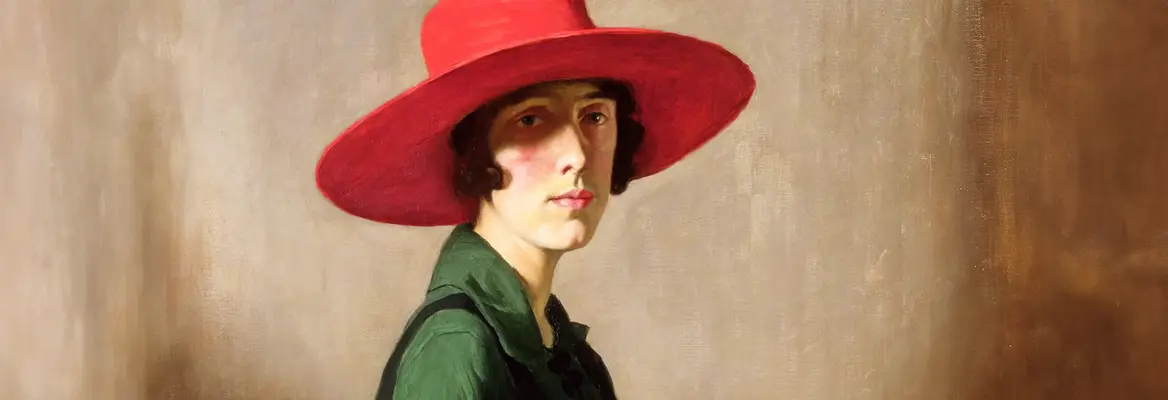

We often look back at previous generations with a sense of moral superiority. Yet throughout history, ideas about sex, gender, and identity often challenged the assumptions of their time. Professor Pamela Caughie argues that by moving past our patronizing view of the past, we can see that today’s debates are not a contemporary crisis, but a continuation of a much older, ongoing conversation about what it means to be human.
For those who study the late nineteenth and early twentieth centuries, a period known in literature and the arts as the modernist era, the concept of transgender is nothing new, even if that term wasn’t coined until around 1990. Before then, what we call transgender went by many terms: transsexualism, transvestitism, sexual intermediacy, contrary sexual feeling, even sexual identity, broadly conceived. Yet from social media to social policy, one would think transgender recently burst onto the scene, perpetrated by the forces of “gender ideology.”
An early Executive Order (#14168) by Donald Trump, entitled “Defending Women from Gender Ideology Extremism and Restoring Biological Truth to the Federal Government,” warns that “gender ideology” imperils “the validity of the entire American system” by erasing “sex in language and policy.” “Gender ideology,” the EO claims, replaces “the immutable biological reality of sex” with “an internal, fluid, and subjective sense of self unmoored from biological facts,” thereby “invalidating the true and biological category of ‘woman’.” President Trump calls this “transgender lunacy.”
___
The nexus of scientific experimentation with the body, philosophical skepticism of Cartesian dualism, and aesthetic experimentation with representation reconceived notions of gender and identity in the modernist era.
___
Even those who support transgender people, such as the gay rights activist Andrew Sullivan, disclaim “gender ideology.” Once a triumph of civil rights legislation, the LGBTQ movement is now focused on “queering the sex binary,” Sullivan writes, “replacing the fact of biological sex with the phantasms of gender ideology” and thereby dissolving “natural distinctions between men and women.”
Yet modernist scholars know that “the immutable biological reality of sex” and the “natural distinctions between men and women” have been disputed for well over a century. At the turn of the twentieth century, psychiatry and medical science, social media and social movements, literature and the arts were all upending long-held beliefs about the irrefutable stability of sex. Transgender, then, understood as a change of sex, emerged out of early-twentieth century scientific discoveries and technologies, such as synthetic hormones and advances in plastic surgery, but it was also engendered by new movements in modern philosophy and modernist aesthetics.
In philosophy, anti-realist thinking rejected Enlightenment universalism and understood concepts of the real as embedded in a particular time and culture. In the arts, formal innovations responded to and shaped a changing social discourse of sexuality and subjectivity. The nexus of scientific experimentation with the body, philosophical skepticism of Cartesian dualism, and aesthetic experimentation with representation reconceived notions of gender and identity in the modernist era. Transgender instantiates the modernists’ philosophical revolt against the idea of a fixed human nature.
The early decades of the twentieth century witnessed profound changes in concepts of sexual and gender identity. Radical social movements, such as suffrage and reforms in marriage and divorce laws; and the ubiquity of the “modern girl,” who cut her hair, dressed in pants, smoked in public, and rode the subway, aroused anxiety about “masculine women and feminine men,” the title of a 1926 popular American song. Psychoanalysts, sexologists, and endocrinologists challenged the sacrosanct nineteenth-century belief in sexual dimorphism in positing a universal bisexuality.
Want to continue reading?
Get unlimited access to insights from the world's leading thinkers.
Browse our subscription plans and subscribe to read more.
Already a subscriber? Log in
Love the iai?
Sign up to get exclusive access.

Related Posts:

Related Videos:

23rd February 2026


Join the conversation