


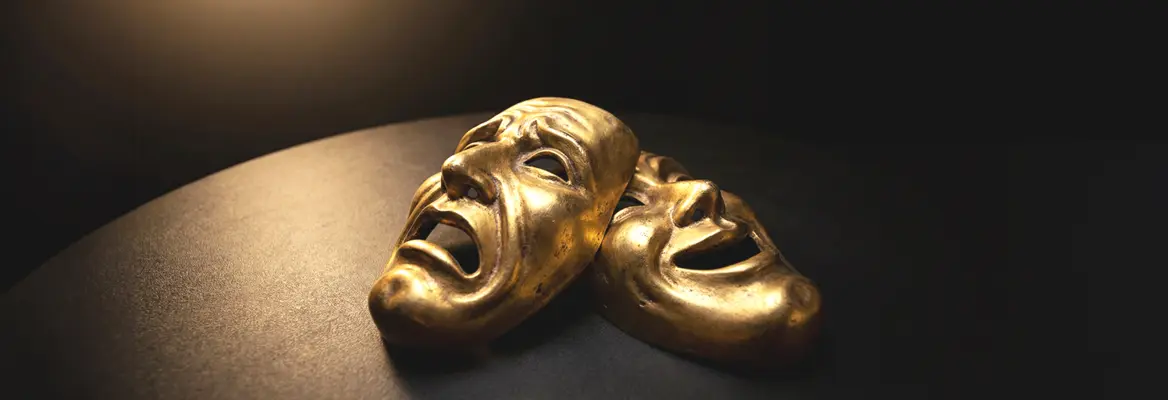

We think of tragedy as exploring suffering, but it actually teaches us to enjoy it. From Plato to Freud, philosopher Paul Kottman argues that our appetite for tragic drama cultivates a sadomasochistic tendency — converting pain into pleasure — that ultimately threatens our capacity for love, loss, and genuine wellbeing. To live well we must resist the temptation to aestheticise our suffering and learn to keep pleasure and pain apart.
“The idea of pleasures that are not somehow painful,” writes Adam Phillips, “has become literally inconceivable, so wedded are we to our perpetual dismay.” Might pure pleasure, free of pain, be a mere idea—one that could become “inconceivable”?
It is worth wondering whether the difference between pleasure and pain is nothing more than a theoretical construct, a fragile cognitive achievement. In practice, after all, we seem highly adept and even eager to find possible pleasures in every sorrow. One of the most surprising things about suffering is how easily we can be tempted to enjoy it, and how creative we are in cultivating that enjoyment. Likewise, it seems natural to feel that pain somehow, somewhere attends every pleasure. Our raw capacity to feel pleasure and pain may not come equipped with the capacity to tell the difference between the one and the other.
Perhaps this is why our species developed the ability to laugh or cry. The fact that smilingly “pleased” people typically look different from the weeping or the suffering is, after all, oddly encouraging. For, our laughter and tears offer signs, or reassurance, that pleasure is really different from pain. Or, that the difference between pain and pleasure is not, in the end, just theoretical but really is “there” in bodily life. Laughter and tears are physically palpable, reassuringly sensuous, not mere ideas.
In the final book of Plato’s Republic, when Socrates at last lays out his “greatest charge” against the mimetic poets and tragedians, he emphasizes that watching dramatic imitations of weeping or laughter is intrinsically pleasurable. When we “hear Homer or some other tragedian imitating one of the heroes sorrowing and making a long lamenting speech or singing and beating his breast, you know that we enjoy it, give ourselves up to it…” And the same applies, Socrates says, to “what provokes laughter” (Republic 605d, 606c).
On the one hand—Socrates is pointing out that human beings, “by nature,” “hunger for the satisfaction of weeping and wailing,” just as we hunger for the pleasure of laughter. This is why we enjoy comedies and tragedies alike. The pleasures of weeping and laughing to which the poets appeal seem like “pure” pleasures—free from pain. “You know that we enjoy it,” says Socrates.
On the other hand—and this is what disturbs Socrates—the pleasure we take in watching tragedies is a pleasure taking in suffering: “the satisfaction of weeping and wailing.” It is, to use a more familiarly modern term, sadomasochistic pleasure.
___
The worry is not that we might miss out on pure pleasures, but that we might miss out on pain.
___
Now, one could be forgiven for thinking that all Socrates is referring to here is the pleasure we take in watching a representation of suffering, as when we watch a tragic play; a kind of aesthetic enjoyment taken in imitation, not the real thing. Aristotle, in the Poetics, suggests something along these lines in his own remarks on the appeal of tragic poetry, when he notes that we enjoy seeing imitations of things (such as dead bodies) that, were they real, would be unpleasant.
Want to continue reading?
Get unlimited access to insights from the world's leading thinkers.
Browse our subscription plans and subscribe to read more.
Already a subscriber? Log in
Love the iai?
Sign up to get exclusive access.

Related Posts:



Related Videos:



20th April 2026


Join the conversation