


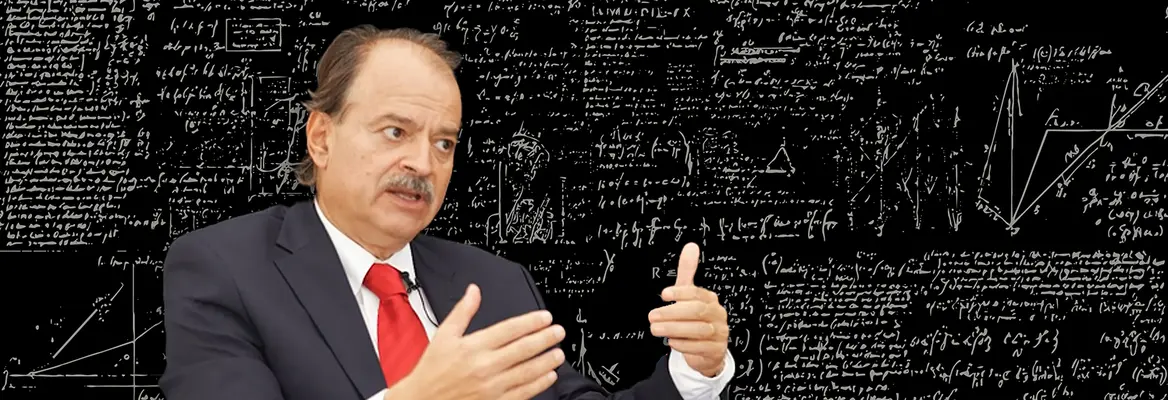

The US spends nearly 20% of its GDP on health and publishes 3 million biomedical papers a year. So why is life expectancy stalling, or perhaps even falling? Stanford professor of medicine John Ioannidis argues that vested interests and basic research mistakes are destroying biomedicine, and that two decades after his bombshell paper, “Why Most Published Research Findings Are False,” the situation has only worsened. AI is generating a new deluge of fraudulent research, and medicine is drifting ever further from quality evidence. In this interview with the IAI's Alasdair Craig, he lays bare the crisis, and suggests ways we might begin to fix it.
Alasdair Craig: You’ve said that “we need to fight against medicine. It’s becoming really dangerous.” Why did you say that?
John Ioannidis: Spending on health in the United States is close to 20% of GDP, and in other countries it’s also increasing. We have about three million papers published in biomedicine every year. Most of them are probably subpar. Many of them are false or misleading. One study estimated that 5.8% of biomedical papers published in 2023 were entirely fake, and the proportion is increasing. Another study has found that among 1,567 medical interventions, only 5.6% had high-quality evidence supporting their benefits (that is, over 94% lacked high-quality evidence supporting their benefits).
We have lots of discussions that are misinformation and full of very weird thinking about medicine. So we’re entangled in a mess that is not leading to better health. In fact, life expectancy in the United States has not really increased or has even gone down.
We see the same experience in many other countries. We are not getting what we should out of an enterprise that includes some amazing researchers and some very well-intentioned people.
You’ve argued that evidence-based medicine has been “hijacked.” What do you think is going wrong in the research process?
We have a lot of research that is not useful. I’m not talking about basic science, which we do need. Actually, we need more of it. By “basic science” I mean research that has practically no deliverables: we don’t really know what we will find and what domain or field or disease it might be useful for eventually.
When I say that a lot of research is not useful, I’m talking about research that tries to generate evidence to enable us to treat specific diseases. Multiple factors make that kind of research very unreliable at times.
For example, there are very strong conflicts of interest. There is research that is run with a specific ideology in mind. There is very poor use of statistical methods and questionable research practices that lead to “significant” results that are not really significant. There is a lot of uncontrolled bias. There are poor study designs. There is fragmentation of research in small studies that are meaningless, where if they do get some signal, it’s very likely that it will be false.
___
Evidence-based medicine has long become finance-based medicine, and it is moving towards becoming corruption-based medicine.
___
And there is fraud that is probably getting worse, especially with the advent of artificial intelligence. We have a very large number of papers now that can be generated by AI, and that can be entirely false and fraudulent and fake—besides the classic fraud that we had in the past. A recent study found that scientific fraud is currently growing at much faster rates than the scientific enterprise as a whole.
So there are multiple threats to the research ecosystem that are making it very difficult to obtain reliable evidence.
Want to continue reading?
Get unlimited access to insights from the world's leading thinkers.
Browse our subscription plans and subscribe to read more.
Already a subscriber? Log in
Love the iai?
Sign up to get exclusive access.

Related Posts:




Related Videos:



Alasdair Craig
14th October 2026



Join the conversation