




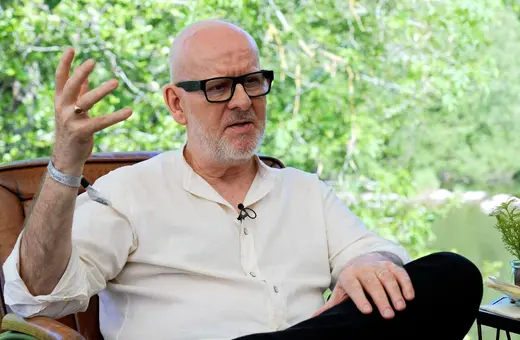
We used to think we could turn to experts and simply follow their lead. But today, with the democratization of knowledge on social media, that confidence has collapsed, and populists on the left and right have urged us to reject their expertise altogether. According to Reiner Grundmann, Professor of Science and Technology Studies at the University of Nottingham, this is a radical mistake. The problem isn’t expertise, but the failure to distinguish between crucially different kinds of experts. Once we see the difference, we must use our judgement to weight expert opinion on its merits, without wholesale acceptance or rejection.
When we encounter a problem that calls for a decision, we often do not know where to start. Should I go with my gut feeling, do some research, ask a chatbot? The more serious the problem, the more likely that I will seek expert advice. The same goes for organizations, especially companies, governments, or public bodies. However, there are many experts, human and non-human, who offer their services, often with different messages.
Some believe we should trust those experts with scientific credentials. Because scientists are competent to analyze situations and can provide informed choices for problem solving, they should be listened to. This might work where the problem is technical, and there is an uncontested science base from which to derive guidance. As soon as we allow for scientific debates on an issue, and for a plurality of desirable solutions, we realize that scientists also disagree on matters of concern; and that scientists often do not know what to do, as their facts do not imply specific actions to be taken. Experts have a different role: they are typically asked to answer the question: “what should we do?” Scientists do not have the authority, or competence, to answer this question. Experts should not be confused with scientists.

On the other side there is the view that scientific expertise has been misused in the public sphere. Instead of discussing the political questions underlying the problems, official, science-based expertise is often used to stifle dissent. This expert overreach actuates skepticism about official expertise. It comes in left-wing and right-wing versions, but both invoke democratic ideals or populist visions. Technocracy, epistocracy and illegitimate elite rule are the charges. These have been articulated by left-wing and right-wing voices, with a shift in visibility and influence from the 1960s, which arguably saw a left-wing dominance (“counter-culture”), to the 2010s when right-wing populism rose.
Democratic institutions should enable citizens to expose and contest the assumptions and omissions embedded in expert knowledge, rather than choosing between unconditional deference to experts and wholesale rejection of expertise. In a way, societies have found a way to deal with this dilemma. It is time to capture the principles of such practices theoretically. Debates about expertise are often confusing, as different meanings of expertise are implied without distinguishing between them. Hence, I present some fundamental distinctions to refine the notion of an expert. Experts have different functions and play different roles in society. I distinguish three types.
Want to continue reading?
Get unlimited access to insights from the world's leading thinkers.
Browse our subscription plans and subscribe to read more.
Already a subscriber? Log in
Love the iai?
Sign up to get exclusive access.

Related Posts:


Related Videos:


28th October 2026

Join the conversation