


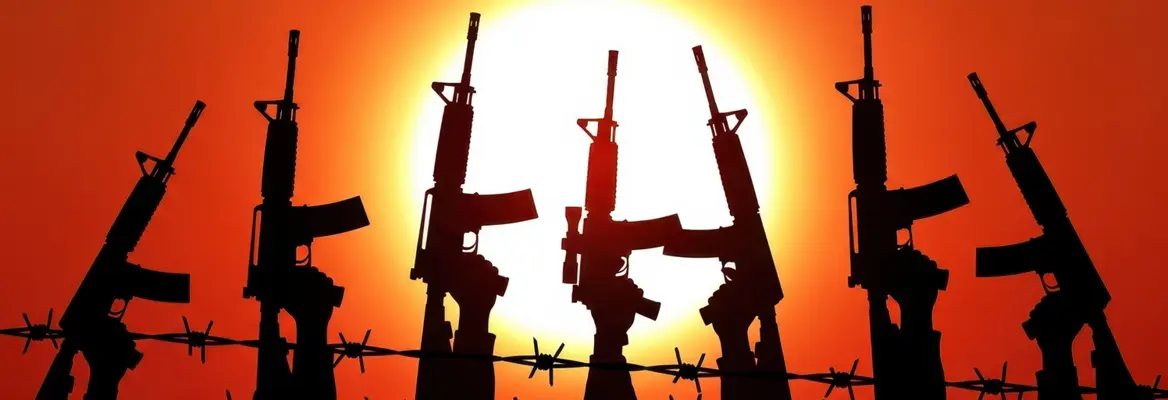

It seems obvious that governments arbitrarily killing their own citizens would make them less popular. But a recent study across Latin America found that higher rates of state killing were associated with increased popularity of the president. This is especially unexpected as less harsh forms of punishment, like imprisonment, do make the president less popular. UCL's Rodwan Abouharb argues the psychology of this can be explained by cognitive dissonance among those who have been victims of crime. This has troubling implications for democracy, as it shows a perverse set of incentives which, in certain circumstances, could encourage leaders to kill their citizens without recourse to the law.
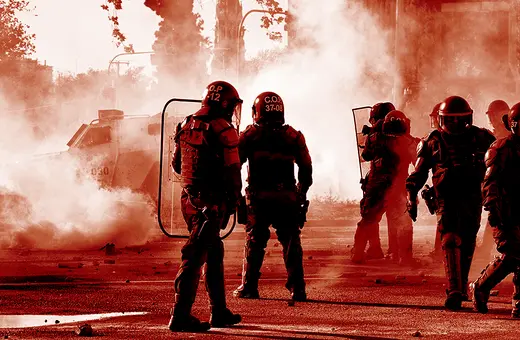
In 2022, El Salvador’s parliament handed the country’s president Nayib Bukele sweeping emergency powers to crush the country’s street gangs. This meant due process rights were suspended and tens of thousands were thrown into already overcrowded prisons, whilst death squads carried out scores of extrajudicial killings with the backing of the government. Bukele has since taken to calling himself the “world’s coolest dictator,” only half-jokingly. And more than half the country loves him for it.
This is not supposed to happen. Political science has a simple and intuitive model of how citizens judge their governments: a state that serves and protects you earns your trust, and a state that turns its guns on its own people loses it. Corruption erodes trust, and so does incompetence. You would therefore think that killing your own citizens without a trial erodes trust too.
Yet a new study by Rodwan Abouharb, Sam Bell and Risa Kitagawa has found something more unsettling. The research draws on more than a decade of survey data from eighteen Latin American countries and shows that when governments carry out extrajudicial killing, trust in the president doesn’t fall—instead, it actually rises. Furthermore, the people whose trust in the president rises the most are not those who are indifferent or uninformed, but victims of crime, who you might expect to be more alert to the dangers of a state no longer obeying the law.
___
For someone who has been assaulted or lost a relative to violent crime, the sight of the state executing suspected criminals may invoke an understandable hunger for protection.
___
The situation becomes clearer when you stop treating “state violence” as a single tool. Governments have many different tools of repression at their disposal. These include arbitrary arrest, censorship, torture, forced disappearance, extrajudicial killing, and more. Previous research has tended to lump all of these together rather than splitting them up and studying them in isolation. Abouharb, Bell and Kitagawa pulled them apart, using a dataset that separately tracks four distinct categories of state violence, and asked “does it matter, to public opinion, which kind of violence a government uses?”
It turns out it matters enormously. Political imprisonment, which involves locking up dissident or alleged criminals without a real trial, does reliably corrode trust in the executive, which is what the textbook model would predict. But extrajudicial killing does the opposite. Across the eighteen countries in the study, higher rates of state killing were associated with higher, rather than lower, presidential trust. If you were to move a country from no reported killings to the highest level recorded in the data, the probability that a citizen expresses confidence in the executive rises. If you moved the same country to the highest level of political imprisonment, then confidence collapses by more than ten percentage points. Two forms of state violence are met with two opposite verdicts from the public.
Want to continue reading?
Get unlimited access to insights from the world's leading thinkers.
Browse our subscription plans and subscribe to read more.
Already a subscriber? Log in
Love the iai?
Sign up to get exclusive access.

Related Posts:

Related Videos:

27th August 2026

Join the conversation