




For decades, we have conflated national success with wealth, using GDP as the ultimate benchmark. But as geopolitical crises mount—from US interventions over oil to intensifying global competition for resources—this obsession with endless expansion is fuelling aggression and global instability. Ecological economist Tim Jackson argues we must abandon GDP as our primary measure of progress and redefine prosperity as health rather than wealth, building a more stable economy that actually serves society and the planet.
In the opening weeks of 2026, the relentless pursuit of economic growth reached new and ignominious heights. In doing so, it showed its true colors: an unseemly willingness to cross borders, redraw sovereignties and legitimize force in the name of prosperity.
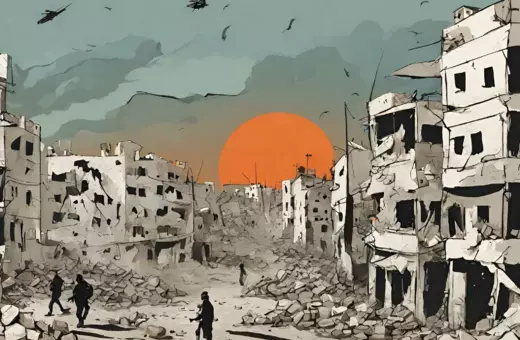
Donald Trump’s “decapitation” of the Venezuelan government was accompanied by blunt demands for access to Venezuelan oil. Emboldened by success, the US President began to renew his territorial ambitions over Greenland—and its mineral wealth. Days later, he set up a spurious “Board of Peace” to reconstruct Gaza for the benefit of America and its allies.
All of this was presented as legitimate positioning in a new multipolar world. Eight decades of the so-called rules-based international order now counted for little. Wealth was paramount. Might was right. History would be written by the victors. This new political realism owed more to Machiavelli’s Prince than to any modern conception of global governance.
___
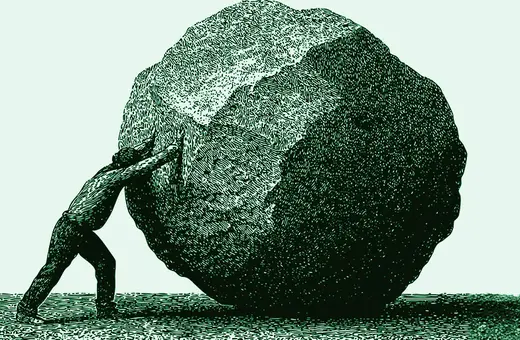
“Growth, growth, growth” is the most persistent political mantra of the post-war era.
___
It was left to Mark Carney, Canada’s central banker turned premier, to point out (in a speech to the World Economic Forum in Davos) that this behavior is hardly unprecedented. Deceit and imperial ambition have accompanied US hegemony as reliably as its claims to defend democracy and civility. The West, Carney argued, should have cried foul decades ago.
What he did not say was that this hypocrisy rests on a deeply familiar logic. A logic that Davos itself has lionized for more than half a century. A logic whose core dynamic is endless growth in the Gross Domestic Product (GDP).
The mantra of growth
“Growth, growth, growth” is the most persistent political mantra of the post-war era. It is repeated so often it sometimes seems like the only fixed star in an otherwise chaotic economic firmament. The UK’s recent electoral history is a case in point. From the supply-side fantasies of Liz Truss’s short-lived reign to the demand-side prudence of the Starmer government, the call for growth at all costs has cast its spell across the entire political spectrum.
___
When prosperity is defined as expansion, competition for resources becomes central to politics. Control becomes necessity. Conflict becomes inevitable.
___
Growth in the GDP is framed as the foundation for success, the prerequisite for jobs, investment and fiscal stability. Only growth, we are told, can fix climate change, pay down public debt and secure sovereign power in an unstable world. In pursuit of growth, we’ve ditched our climate commitments, reneged on our overseas aid and handed essential services to equity financiers who suppress wages, offshore profits and erode quality.
Still the glittering prize remains elusive. Calling for growth is clearly not the same thing as delivering it. Truss’s tax giveaway crashed the markets she believed would save us. Rachel Reeves’ hike in employer national insurance undermined the livelihoods she pledged to protect. Labor productivity growth—the engine of the GDP—has hovered around zero for most of the last two decades. Fiscal headroom shrinks for each successive government, and the UK economy remains trapped somewhere between austerity and instability.
Want to continue reading?
Get unlimited access to insights from the world's leading thinkers.
Browse our subscription plans and subscribe to read more.
Already a subscriber? Log in
Love the iai?
Sign up to get exclusive access.

Related Posts:

Related Videos:

9th April 2026



Join the conversation