


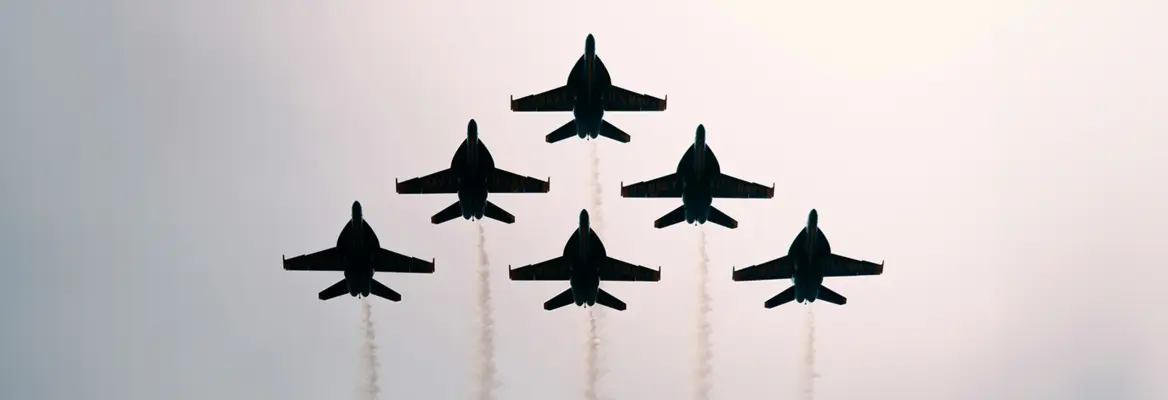

Political scientist Nader Hashemi here argues that Iran was attacked because it resists American power and refuses to surrender to its commands. Hashemi writes the war is about American empire, not about nuclear weapons — pointing out that Iran offered to hand over its entire stockpile of enriched uranium and was turned down — nor about protecting Iranians from one of the region's most repressive governments. It also can’t be understood exclusively as a result of Trump and Netanyahu’s personalities. What Washington wants, and has always wanted, isn't a safer Iran. It's a subservient one.
The US-Israeli assault on Iran is, at its core, an attempt to reorder the geopolitical landscape of the Middle East. This claim challenges a common view that has sought to interpret this war as primarily a function of personalities. Specifically, Donald Trump’s authoritarian assault on the post-war international order and his close alliance with the hawkish Israeli Prime Minister, Benjamin Netanyahu. No doubt the role of both individuals has been a critical factor in explaining this drama. To understand this war exclusively via this lens, however, is to fundamentally misunderstand the relevant political context and the strategic motives that have incentivized the US and Israel to attack Iran now. At its core, this war is about solidifying Western hegemony in the Middle East. For the past 47 years, the Islamic Republic of Iran has stood in the way. With its economy in ruins, its people in revolt, and its regional alliances in disarray, Iran has never been weaker economically, politically and militarily. The time to permanently solve “the Iran problem” has arrived.
It is noteworthy that most Western governments have supported this attack to varying degrees. The initial statements from the UK’s Keir Starmer, Canada’s Mark Carney and Germany’s Friedrich Merz replicate the same arguments as the American government, albeit with more diplomatic finesse than the Truth Social postings of President Trump.
In comparing these statements, these world leaders appear to be reading from the same political script. This is not an aberration. It reflects a longstanding collective Western security posture toward the Middle East. To wit, Iran is the main source of Middle East instability, it cannot be allowed to develop nuclear weapons, and the suffering people of Iran deserve liberation from their oppressors. Since these are the foundational claims invoked by Western leaders to justify the current war, they require critical scrutiny.
Iran and Mideast stability
The policies of the Islamic Republic of Iran have destabilized the Middle East. From Iraq to Yemen to Lebanon, to Israel/Palestine, and critically in Syria after the 2011 uprising, Iranian intervention has produced regional chaos and suffering. But can instability in the Middle East be laid exclusively at the doorstep of Iran? The parameters of the intellectual and foreign policy debate in Western capitals take this as given. What about other regional and international actors? Have they contributed to the wider instability of the Middle East.
Want to continue reading?
Get unlimited access to insights from the world's leading thinkers.
Browse our subscription plans and subscribe to read more.
Already a subscriber? Log in
Love the iai?
Sign up to get exclusive access.

Related Posts:



Related Videos:



13th April 2026


Join the conversation
Brian Balke 13 April 2026
The American statecraft system is incoherent. In the aftermath of becoming the only superpower, every foreign policy decision became a political contest. The "hawkish" GoP favored confrontation. The "dovish" Dems favored negotiation. The damage done by GoP presidents to US trustworthiness overseas gave them control over the agenda. The Dems could not repair the damage done enough to make significant progress.
Obama invested heavily in an Iranian detente.
What should be understood is that it is not just US interests that have throttled the self-determination of the Iranian people. The Soviet Union, seeking a warm-weather port, absorbed Central Asian nations. Failing in Iran, they eventually invaded Afghanistan. In parallel, Western resource extraction multinationals (principally fossil fuel companies) watched newly independent nations reclaim resource rights granted by collapsed colonial empires. Characterizing this as "communism," the CEOs managed to buffalo Western nations into intervention against native leaders seeking to gain a better outcome for their people.
This was not true only in Iran. It was true throughout the third world.
It is convenient to seek to simplify this equation - to declare that America is an "empire" in the mold of the Europeans. Unfortunately, the world is more complicated than that. Iran is the last holdout against Israeli hegemony in the Middle East, having seen Iraq's response to the bombing of its nuclear power plants (offering $30,000 to the families of Palestinian suicide bombers) result in decapitation of Hussein's regime. Iran is also a holdout against the Saudi royal family's subjugation of Islam (through Wahhabism) to monarchy throughout the region. These Iranian aims are defensible. Unfortunately, the cost has been enormous to the Iranian people. The best argument against political violence in the region might have been to create success for them.