


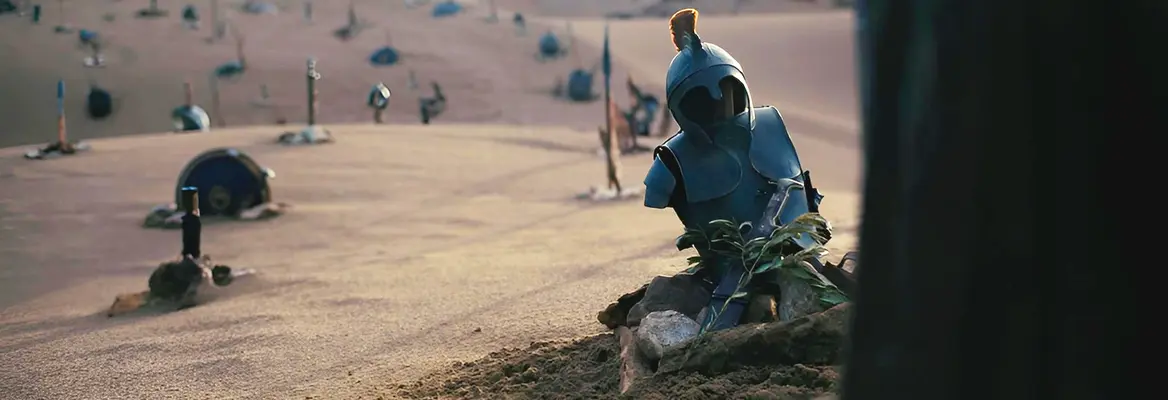

With Christopher Nolan’s The Odyssey in cinemas, author and former intelligence officer Andy Owen examines current geopolitics through the lens of Homer’s epic. Owen argues that honor is still a vital part of modern war, and that ignoring this psychological aspect may cause ongoing wars around the world to continue longer than they might otherwise need to. Owen argues, only by embracing uncertainty, being malleable, and by learning to live with those we fiercely disagree with, can we meet the Homeric challenges of the modern world.
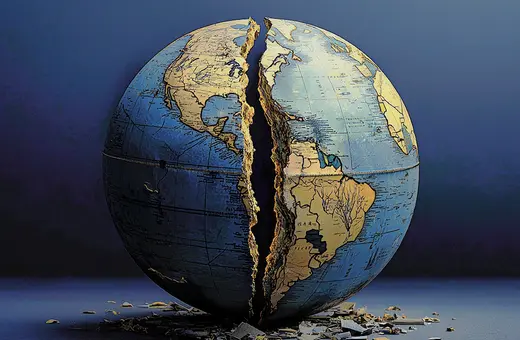
Classicist Daniel Mendelsohn claims the Odyssey is “haunted by a feeling that the old world order has come to an end, and now we’re just on our own, making our way as best we can.” Inside the penultimacy of the collapse of the rules-based international order, it is possible to sense the ghostly echoes of the collapse of Bronze Age civilization, of palace cultures and warrior kings Homer was looking back on in his epics. The ancient poem and its hero Odysseus can provide timely lessons for us to navigate our fragmenting world.
Aristotle describes the plot of Homer’s Odyssey accordingly: “A certain man has been abroad many years; he is alone, and the god Poseidon keeps a hostile eye on him. At home the situation is that suitors for his wife’s hand are draining his resources and plotting to kill his son. Then, after suffering storm and shipwreck, he comes home, makes himself known, attacks the suitors: he survives, and they are destroyed.” There is much more to the sweeping, twisting and turning epic. Its layers reflect the legacy of a long oral tradition that involved singers and storytellers who developed the story in multiple different locations across the Greek-speaking world. It is a tale of woven narratives; a rich tapestry that in turn became a loom for others to weave their stories from, stitching together the fabric of a heroic Roman epic, quest narratives, a domestic comedy, a modernist voyage into the subconscious of twentieth-century Dubliners, anti-colonial narratives, romance, revenge, Bildungsroman and biography. Director Christopher Nolan’s film version will provide a new reading.
In Emily Wilson’s translation she uses “complicated” for the Greek polytropos that introduces Odysseus (others have used man of many ways” or “many twists and turns,” “cunning,” and “resourceful”). Wilson landed on “complicated” for a combination of syntactical and semantical reasons, including liking the concept of complexity as a positive quality in the world of the poem. Wilson isn’t alone in identifying the benefit of complexity. There is a line among the fragments of the Greek poet Archilochus which says: “The fox knows many things, but the hedgehog knows one big thing.” Philosopher Isaiah Berlin uses this line to divide thinkers into “Hedgehogs” and “Foxes.” Hedgehogs relate everything to a single central vision, system or universal principle, through which all experience is understood. They include Plato, Hegel, and Dostoevsky. Foxes pursue many ends, often unrelated, even contradictory, seizing the essence of a wide variety of experiences without trying to fit them into any single overarching scheme. Berlin’s foxes include Shakespeare, Aristotle, and Tolstoy, whom he saw as a tragic genius of plural perceptions who longed for a single, unifying truth about history. By nature a fox, Tolstoy believed in being a hedgehog. Berlin did not consider the fictional characters, but although he has a singular goal of return, the many-sided, complicated Odysseus is the archetypal fox.
Want to continue reading?
Get unlimited access to insights from the world's leading thinkers.
Browse our subscription plans and subscribe to read more.
Already a subscriber? Log in
Love the iai?
Sign up to get exclusive access.

Related Posts:



Related Videos:

16th July 2026
Join the conversation