


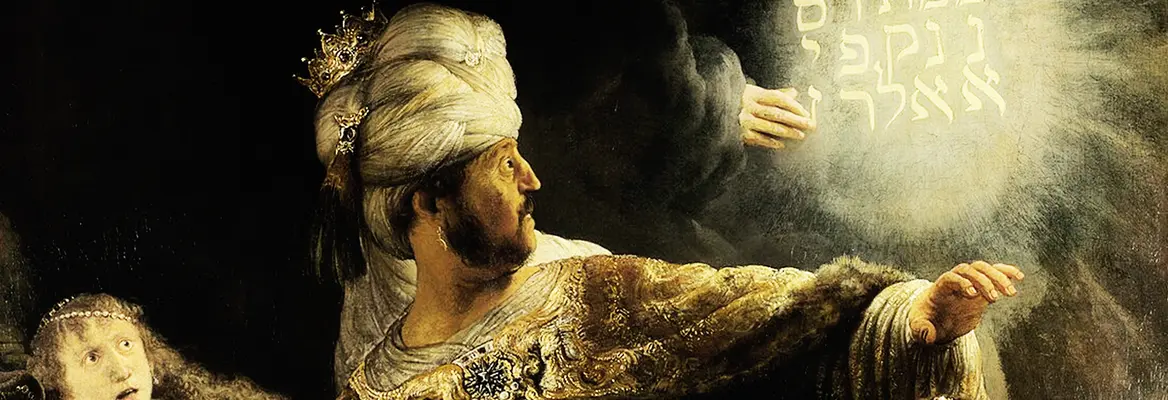

We assume that adopting a political position is a matter of being awakened—of peering behind the curtain and seeing the hidden Truth. From Marxism’s historical materialism to Curtis Yarvin’s so-called “red pill,” radically different ideologies have all claimed to reveal a political truth that is discovered, not created. In this article, philosopher Marianne Janack argues this is a radical mistake. Philosophy cannot ground any political theory, and by invoking a non-human authority—whether God, Reality, or Truth—to ground our politics, we evade responsibility for the world we live in and create. We must instead recognize that values are made, not found.
When Donald Trump won the American election in 2016, lots of people called and emailed me to say that Richard Rorty seemed to be a prophet—that he’d predicted something like this in his book Achieving Our Country, which had been published nearly 20 years before. In that book, Rorty predicted that:
The nonsuburban electorate will decide that the system has failed and start looking around for a strongman to vote for—someone willing to assure them that, once he is elected, the smug bureaucrats, tricky lawyers, overpaid bond salesmen, and postmodernist professors will no longer be calling the shots. A scenario like that of Sinclair Lewis’ novel It Can’t Happen Here may then be played out. For once a strongman takes office, nobody can predict what will happen… All the sadism which the academic Left has tried to make unacceptable to its students will come flooding back. All the resentment which badly educated Americans feel about having their manners dictated to them by college graduates will find an outlet.
Since Rorty had been dead nearly ten years when Donald Trump was elected, the book seemed to predict exactly how Americans would respond: they would look for an avatar of reaction—a strongman who could set things right.
___
By invoking a non-human authority (God or Reality or Truth) to legitimize our hopes or justify our political or social arrangements, we are evading responsibility for the world we live in and create.
___
But if Rorty seemed to be prescient in this case, he is also seen as an avatar in his own right—an avatar of the threat posed by a rejection of the idea of truth and reason in politics. Much of the controversy surrounding Rorty was prompted by his claims about Truth and Reality: that appeals to these concepts were part of the theological hangover that the Enlightenment had tried to replace with the idea of a secular good. But the Enlightenment project was not finished, Rorty thought, as long as humans continued to think that there was something like Reality-as-It-Is-in-Itself (Ding an sich) and Truth as correspondence with the way things really are. Realists no longer think that God underwrites the Good and the True, but Rorty claimed that they’d replaced God with a non-human Reality. And the idea that human beings have rights which are God-given, Rorty warned, is another piece of religious dogma. Though it might have had rhetorical value in the fight for civil rights and against colonialism, Rorty warned, it won’t work forever. And indeed, as he seemed to predict in Achieving Our Country, those gains could provoke a backlash.
Red pills
Want to continue reading?
Get unlimited access to insights from the world's leading thinkers.
Browse our subscription plans and subscribe to read more.
Already a subscriber? Log in
Love the iai?
Sign up to get exclusive access.

Related Posts:


Related Videos:



14th May 2026



Join the conversation
Bjarte Rundereim 17 May 2026
There is only one political truth in history, if you push the fluff aside: Politics are the fight for the vested interests. The elite (seen from an economical standpoint) have their interest in getting as much as possible to themselves. The paid workforce have their interes in getting as much as possible to themselves. The middle ground will also have their interests in getting as much as possible for themselves.
This point of view must also include possible ways to hinder or remove any opposition to this goal, and that goes for all groupings. The rich will squeeze the workforce and the non working dependents. The poor will try to disarm the rich. The middle ground will work with the rich or the poor, depending on the outlook for maximizing their own security or growth.
Religion has been mentioned: Religion has traditionally been mandated and run by the elite; decided by kings, emperors and other rulers. Religion is a powerful way to rule, because it has an almighty power that you may not cross, without endangering your present life, or the next, and with a set of rules that supports all kinds of authority, all the way down to your mother and father.
A thousand years ago, the Norse leaders needed a religion for warriors, just like Mohammed a little later. No fear of death, and rich rewards for all who die as soldiers. Other rulers needed more of submission and fear of God and authority, and enter the God of Love and turn the other cheek.
All politics and One Ring to rule them all.