


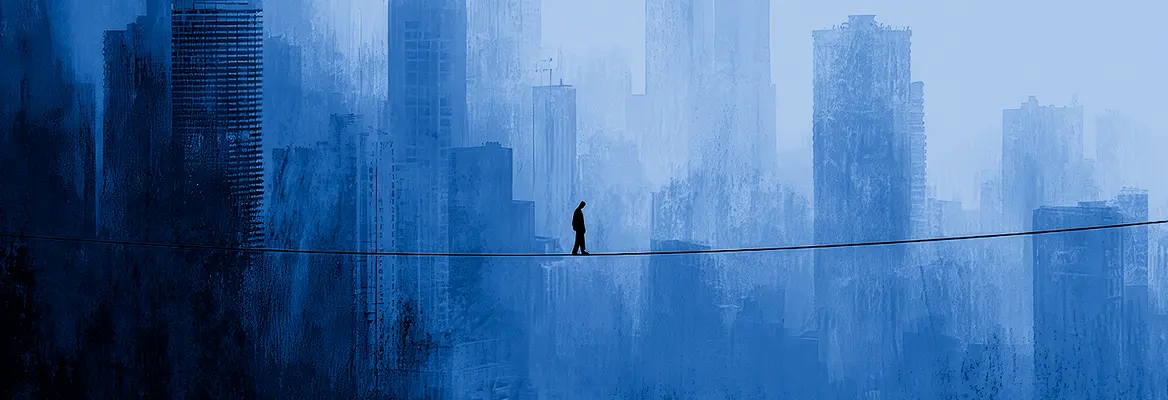

Populists like Trump are not responsible for killing liberalism. It is dying because the material conditions that sustained it have disappeared. So argues Rana Dasgupta, whose writing has long examined the human costs of globalization. Western liberal democracy has rested on three pillars: industrial economies, Western economic supremacy, and a single liberal superpower. All three are gone. Dasgupta answer is not to give up on liberalism: liberal values of equality and fraternity are as relevant as ever, and if states can’t be trusted to safeguard liberalism, it must be reinvented as a radical social movement.
It is clear that liberalism is in retreat. Its institutions and practices are losing their purchase on the world; its core tenets and propositions struggle to elicit belief. Liberals tend to blame the demise on their political foes, who are eclipsing them at the polls. But liberalism was not murdered. It died naturally, largely because the conditions that produced and sustained it ceased to obtain. If we wish to retrieve anything from the liberal tradition, we need to understand better what has happened. This essay sketches the historical processes that made and unmade liberalism, in order to approach the question: can we revive liberalism? The answer is for liberalism to be jettisoned by states and preserved as a social movement.
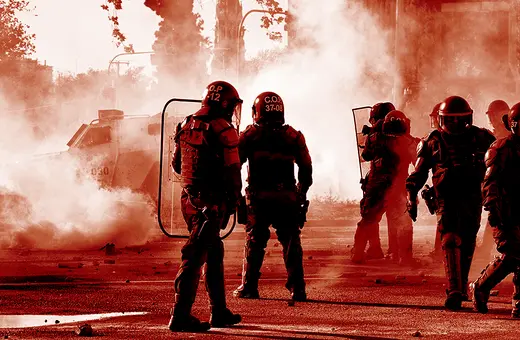
Within Western states—liberalism’s traditional heartlands—liberty is the preserve of capital more than of human beings, to the detriment of both equality and fraternity. Democracy—which was never an event, but a societal orientation—is unravelling. Liberalism’s essential innovation and component, the individual, is being unmade by surveillance and automated opinion. Oligarchy, and the failures of the political class, are making “progress”—which once supplied liberalism with all its moral force—seem antique.
___
Philosophical ideas do not spontaneously produce change. They require certain material conditions.
___
Liberal conceptions of interstate relations are going a similar way. The “rules-based international order”—which supposedly committed states to a shared movement toward peace, human rights and, latterly, environmental stability—is collapsing. Against the lofty 1940s dream of a United Nations dispensing international law and harmony looms the reality of anarchy and cut-throat competition.
Liberalism began as a religious reformation. Pushing the Christian divinity to the edges of the cosmos, at whose centre now lay the blazing “mortal god” of the modern state, thinkers of the seventeenth and eighteenth centuries added novel elements to classical theology, such as “individuals” and “rights,” so creating a comprehensive formula for the liberal state.
Why then was no state truly “liberal” until the nineteenth century, and why did universal suffrage become generalized only in the twentieth? Because philosophical ideas do not spontaneously produce change. They require certain material conditions—and the conditions for liberalism did not begin to coalesce in Western states until the middle of the nineteenth century.
Those conditions, which obtained intermittently from 1840 to 2000, were especially threefold. 1) Western economies were organized around industrial production. 2) The West had superior resources to the rest of the world and captured the majority of global revenues. 3) A single Western superpower presided over the capitalist system.
We can immediately observe that those conditions were both exceptional and unsustainable; today, their disappearance is largely complete.
The West was industrial
Want to continue reading?
Get unlimited access to insights from the world's leading thinkers.
Browse our subscription plans and subscribe to read more.
Already a subscriber? Log in
Love the iai?
Sign up to get exclusive access.

Related Posts:

Related Videos:

1st June 2026
Join the conversation