


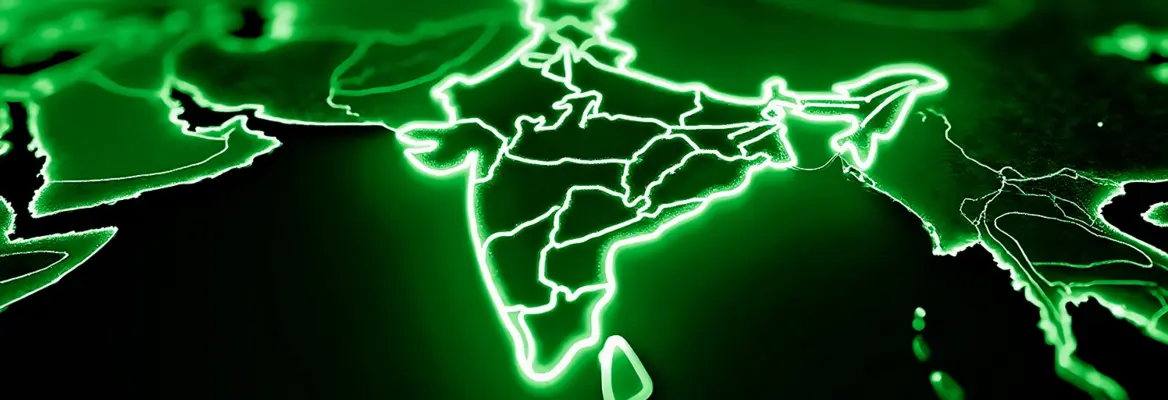

India has been criticised by Donald Trump and Western leaders for refusing to fall into line, from buying Russian oil to resisting pressure to choose sides between Washington and Beijing. But what looks like defiance may be foresight: Narain D. Batra argues that India’s commitment to strategic autonomy, maintaining relations across rival powers while safeguarding its own interests, is not an anomaly but a blueprint for a world moving beyond rigid blocs. As Western states quietly recalibrate their own China policies, India’s much-maligned independence begins to look less like exceptionalism and more like an early response to an emerging multipolar order.
Early December last year, when Prime Minister Narendra Modi welcomed President Vladimir Putin to New Delhi with visible warmth and embrace, the reaction in Washington and European capitals was immediate and resentful. The symbolism, many argued, spoke for itself. At a moment when the West sought to isolate Russia economically and diplomatically, India appeared to be doing the opposite. The announcement that the two governments would ensure “uninterrupted” Russian energy supplies only hardened that judgment.
What the West interpreted as defiance was, from New Delhi’s perspective, continuity. India did not alter its Russia policy in response to the Ukraine war. It simply reaffirmed a position that has been consistent for more than three decades, one rooted in strategic autonomy, an avatar of Jawaharlal Nehru’s non-alignment, diversification of partnerships, and resistance to binary choice. The failure lies not in India’s conduct, but in the West’s assumption that a crisis in Europe should automatically reorder strategic conduct in India. This assumption is neither historically grounded nor analytically sound. India’s engagement with Russia long predates Vladimir Putin and Narendra Modi. It survived the collapse of the Soviet Union, the end of the Cold War, and the rise of U.S. unipolarity. In the 1990s, when many expected India to pivot decisively toward Washington, New Delhi instead pursued a dual-track strategy, deepening ties with the United States while preserving its relationship with Moscow. That approach was not hedging born of uncertainty. It was a deliberate effort to avoid dependence on any single great power.
___
India is not a treaty ally of the United States. It has never sought to be one.
___
Strategic autonomy, in the Indian context, is not a new rhetorical posture. It is a doctrine that evolved from India’s prime minister Jawaharlal Nehru’s non-alignment policy that developed during the Cold War. Today, as India’s minister of external affairs Subrahmanyam Jaishankar has argued in The India Way: Strategies for an Uncertain World (2020), strategic autonomy reflects the structural realities of India’s geopolitical and security environment, not ideological nostalgia. Those realities have only sharpened in recent years. India faces an unresolved and increasingly militarized border dispute with China, its principal long-term strategic challenger. Since 2020, the Line of Actual Control has witnessed continued deployments, infrastructure buildup, and lethal clashes. No responsible Indian government can afford to weaken its deterrence posture during such a confrontation. Russia remains vital to that position, supplying military systems that cannot be replaced overnight without operational risks. It might seem like constraint, but it is also a choice that enhances India’s options.
Want to continue reading?
Get unlimited access to insights from the world's leading thinkers.
Browse our subscription plans and subscribe to read more.
Already a subscriber? Log in
Love the iai?
Sign up to get exclusive access.

Related Posts:
Related Videos:
2nd February 2026


Join the conversation