The politics of the body


About the Course
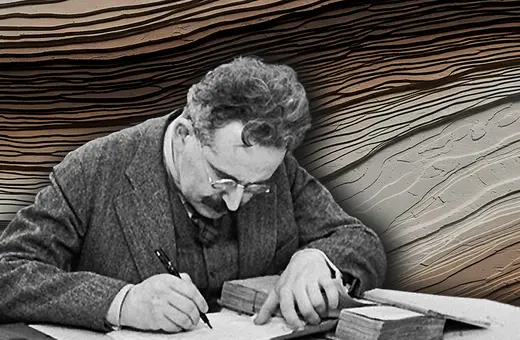
What can we learn about someone based on how they walk? How does our historical and cultural background determine the nature of our gait? In this course, Professor Matthew Beaumont examines the relationship between a person’s gait, posture and comportment, and their suffering and life experience. He explores the racialisation of posture and gait, telling a political and social story as well as an individual one. He offers a study of Charlie Chaplain’s unique gait and asks what his walk can tell us about this avant-garde artist.
By the end of this course, you will have learnt:
- How a person’s gait, posture and comportment can reveal aspects of their social background, experiences and emotional life
- The concept of hexis and how bodily habits reflect class, culture and social structures.
- Why scholars such as Marcel Mauss argue that walking and other “techniques of the body” are socially learned rather than purely natural.
- How posture and gait have been politically and culturally interpreted, including ideas about resistance and the racialisation of bodily movement.
- What The Tramp’s distinctive walk in Modern Times by Charlie Chaplin reveals about class, individuality and the mechanisation of the human body under industrial capitalism.
As part of the course, there are in-video quiz questions to consolidate your learning, suggested further readings to stimulate a deeper exploration of the topic, discussion boards to have your say, and an end-of-course assessment.
IAI Academy courses are designed to be challenging but accessible to the interested student. No specialist knowledge is required.
Course Syllabus
About the Instructor
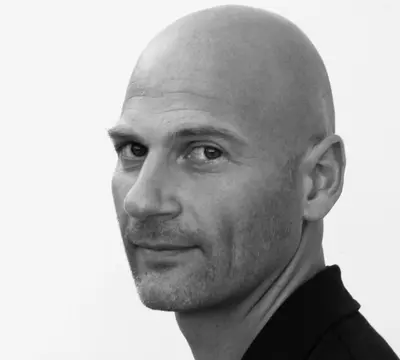
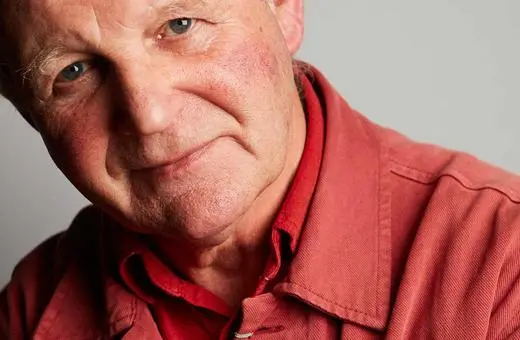
Matthew Beaumont
Matthew Beaumont is Professor of English at University College London, UK and the author of several books, including two on the topic of late nineteenth-century utopianism. He has also edited several essay collections and published numerous articles in scholarly journals.
Suggested Further Readings
Berger, J., and Mohr, J. 2016. A Fortunate Man: The Story of a Country Doctor. Edinburgh: Canongate.
Fanon, F. 2021. Black Skin, White Masks. London: Penguin Classics.
Haddour, A. 2021. Frantz Fanon, Postcolonialism and the Ethics of Difference. Manchester: Manchester University Press.
Reich, W. 1983. The Function of the Orgasm. London: Souvenir Press.
Bourdieu, P. 1977. Outline of a Theory of Practice. Cambridge: Cambridge University Press.
Bourdieu, P. 1998. Practical Reason: On the Theory of Action. Stanford, CA: Stanford University Press.
Bourdieu, P. 2000. Pascalian Meditations. Cambridge: Polity Press.
Mauss, M. 1973. “Techniques of the Body.” Economy and Society 2 (1): 70–88.
Bloch, E. 1986. The Principle of Hope. Cambridge, MA: MIT Press.
Milton, J. 1667. Paradise Lost. London: Samuel Simmons.
Straus, E. W. 1952. “The Upright Posture.” Psychiatric Quarterly 26 (4): 529–561.
Meet your instructor
Literature & Ideas































Relationships & Sexuality




Latest Articles