The IAI Academy offers courses from award-winning academics across Philosophy, Science, Politics and the Arts. Learn from this generation's leading thinkers, Slavoj Žižek, Sabine Hossenfelder, Jared Diamond, Kimberlé Crenshaw, and more. Our courses break with the convention that teaching can and should be devoid of opinion, inspiring fresh and original thinking.
To access discounts and free courses on the IAI Academy, subscribe to IAI.tv.
Most popular courses

Philosophy courses



Science Courses






Politics Courses










Arts & Culture Courses




-
The History and Philosophy of Human NatureInstructor(s): Subrena SmithCategories:Human nature continues to fascinate sociologists and philosophers alike. Join leading philosopher, Subrena Smith, to uncover a radical new take on why the very idea of 'human nature' is flawed.
-
Untangling the Mysteries of Space and TimeInstructor(s): Julian BarbourCategories:The nature of space and time has puzzled thinkers for centuries. In this academy, acclaimed physicist Julian Barbour will explore the origins of this puzzle, and offer his own surprising solutions.Start Time:
-
The Metaphysics of Naturalism
philosophy
Fiona Ellis
• Coming SoonInstructor(s): Fiona EllisCategories:The Metaphysics of NaturalismThis course explores Fiona Ellis’ vision of an expansive naturalism—a radical philosophical approach that makes space for God, desire, and meaning within the natural world. -
Unlocking the Developing WorldInstructor(s): Stefan DerconCategories:Oxford Economist and Director of the Centre for the Study of African Economies, Stefan Dercon puts forward his new formula that allows the poorest countries to take these first steps towards economic prosperity and better lives for their populations.Start Time:
-
A New World OrderInstructor(s): Nigel InksterCategories:The war in Ukraine poses a major challenge to our global world order, and represents a battle for ideological supremacy. Where has this growing instability come from? And what has made it possible?Start Time:
-
The Power of the Unconscious MindInstructor(s): Sam ColemanCategories:Our unconscious mind is something we do not notice, but which is always with us. Could it be that who we are, how we view the world, and how we act are all governed by a force over which we have no control?
-
Physics and the Meaning of LifeInstructor(s): Sabine HossenfelderCategories:From the nature of reality to the limits of knowledge, she examines whether scientific methods can provide meaningful answers to age-old philosophical debates. Join Sabine Hossenfelder as she argues physics can answer philosophy's deepest questions.
-
A New Approach To RaceInstructor(s): Tommy J. CurryCritical Race Theory has taken centre stage in recent debates surrounding racism. However, critics argue that current incarnations offer ineffective solutions to the issue. Join Tommy Curry, who asserts a new strategy for approaching structural racism.
-
The Philosophy of PsychedelicsInstructor(s): Peter Sjöstedt-HughesIt's time to take psychedelics, and the experiences they produce, seriously. They have historical, ethical, aesthetic, and metaphysical significance. Join Peter Sjöstedt-Hughes to explore the philosophy of psychedelics.
-
Why We Misunderstand Mental HealthInstructor(s): James DaviesCategories:We are misunderstanding mental illness. The medical solution is not working, and rates of mental illness continue to soar. So what is the alternative? Join Dr James Davies, who argues that mental health issues have social causes, not biological ones.
-
The Evidence and the Solution to Culture WarsInstructor(s): Eric KaufmannCategories:Cancel culture has become a central talking point in modern life, causing a growing divide within friendships, families, and societies. Join Eric Kaufmann, who explores the options for escaping our current divisions.
-
Unwrapping BeautyInstructor(s): Bence NanayCategories:What does it mean to experience beauty? Bence Nanay argues that our perception of beauty is purely a function of our cultural background and offers a radical new direction for the field of aesthetic appreciation.
-
To See The One That Sees YouInstructor(s): Janne TellerCategories:Who are we? What defines our identity? In this course, Janne Teller rejects the current fashionable definition of identity based on external markers, such as nationality, religion, job and sexuality. Instead, she proposes a new perspective on identity.
-
The Power of the BrainCategories:For a long time, the brain served as an object of mystery. However, over recent years, we have begun to understand more about this fascinating organ. Join Prof. Lisa Feldman Barrett to uncover the secrets of the brain.
-
Engineering Our HumanityInstructor(s): Melanie ChallengerCategories:For the first time, we have technologies that allow us to engineer what it is to be human. But will this make dreams of longer lives, endless health, and even immortality come true? Or are we entering dystopia?
-
The Future of LiberalismInstructor(s): Mark LittlewoodCategories:Why has liberalism become a dirty word in recent years? Join Mark Littlewood as he sets out his vision for the moral and economic future of liberalism, and outlines why we need it now more than ever.
-
Stoicism as Practical PhilosophyInstructor(s): Massimo PigliucciCategories:Stoicism is an ancient Greco-Roman philosophy that has been repurposed for the needs of the 21st century. CUNY philosopher Massimo Pigliucci, author of How to Be a Stoic, walks us through the basic theory and some practical applications.
-
What Men Really WantInstructor(s): Nina PowerCategories:Who are 'men'? What do they want? How did we get to this point of fear and mistrust? And where can we go next?
-
AI: Bias, Trust, and Doing GoodInstructor(s): Joanna BrysonCategories:AI is one of the new frontiers defining the 21st century. We know it's game-changing. But what we don't know is if those changes will make our dreams or nightmares come true?
-
China's Next MovesInstructor(s): Rana MitterCategories:What are China's political origins? What has shaped their ideology most? Where is China headed today? Join Rana Mitter as he charts a riveting course through Confucianism, WW2, Maoist doctrine, and the modern CCP.
-
Life Lessons from David HumeInstructor(s): Julian BagginiCategories:How should we think? How should we live? How ought we to treat others? From Hume’s philosophy, to his life's history, to his observations on human behaviour; Julian Baggini gathers together life lessons from one of the most important names in philosophy.
-
Breathing Life into the Laws of PhysicsInstructor(s): Sara WalkerCategories:Fundamental physics has been a great success story. Yet the central phenomenon of our existence - life itself - has been left out. Join theoretical physicist and astrobiologist, Sara Walker.
-
Jared Diamond on Personal and World CrisesInstructor(s): Jared DiamondCategories:What is a crisis? How have countries dealt with them previously, and how should they deal with them? From personal crises to national and global ones, Jared Diamond explores the similarities in crisis management between people and nations.
-
Exploring IntelligenceInstructor(s): Susan SchneiderCategories:What is intelligence? Join Susan Schneider, one of the world’s most prestigious philosophers of mind, as she disentangles our confusions in thinking through the smarts of conscious and non-conscious systems.
-
How to Lose a Country and How to Save ItInstructor(s): Ece TemelkuranCategories:Award-winning Turkish author and journalist Ece Temelkuran delivers a stark warning about the insidiousness of nationalism and proposes a solution through a new conception of humanity and morality.
-
Massive GravityInstructor(s): Claudia de RhamCategories:What is a graviton, and how might giving it mass fix age-old problems in physics? Award-winning theoretical physicist Claudia de Rham outlines her new theory of gravity.
-
Pure Awareness and the Ethics of Machine LearningInstructor(s): Thomas MetzingerCategories:Artificial consciousness could soon emerge - and with it, a potential for limitless artificial suffering. Using meditation as his starting point, Theoretical Philosopher Thomas Metzinger explains why we should care about computer suffering.
-
Thinking Like a ScientistInstructor(s): Jim BaggottCategories:When sensationalism is prioritised over truth, how can we distinguish fact from speculation? Jim Baggott examines the rise of pseudoscience, and talks through the flawed methods to blame.
-
The Philosophy of DehumanisationInstructor(s): David Livingstone SmithCategories:From the Rwandan genocide to Nazi concentration camps, atrocities often manifest when the oppressors see their victims as less than human. Join philosopher of psychology, David Livingstone Smith as he uncovers the role of dehumanisation in atrocities.
-
A Passion for IgnoranceInstructor(s): Renata SaleclCategories:How much do we want to know when it comes to our bodies? Does knowledge have a different value in sickness than in health? Psychoanalyst and author of A Passion for Ignorance, Renata Salecl, argues that sometimes the wisest choice is to remain ignorant.
-
Our Place in the UniverseInstructor(s): George EllisCategories:Does physics allow free will? Templeton Prize-winning cosmologist George Ellis presents his account of what chance, necessity and purpose in the universe mean for agency.
-
Medicine Out of Its DepthInstructor(s): Janet Radcliffe-RichardsCategories:Are technologies advances leaving traditional medical ethics behind? Oxford Professor of Practical Philosophy, Janet Radcliffe-Richards explores new ways forward for modern bioethics.
-
Philosophy in MotionInstructor(s): Noël CarrollCategories:From It's a Wonderful Life to the Matrix, films have often been used to present philosophical ideas. Leading figure in the Philosophy of Art and specialist in the moving image, Noël Carroll looks at cinema to ask what it means to truly 'philosophize'.
-
Values as our New ReligionInstructor(s): Linda WoodheadCategories:In Britain and the US, more and more people identify as having no religion. Yet having strong values is more important than ever. Professor of Religion and Society, Linda Woodhead discusses and critiques the liberal, moral, and religious landscape.
-
Truth, Post-Truth, and TechnologyInstructor(s): Ella McPhersonCategories:Ella McPherson, Co-Director of the Centre of Governances and Human Rights, looks at how technologies are changing the work of human rights fact-finders.
-
Speculative RealismInstructor(s): Graham HarmanCategories:Speculative Realism has rapidly gone from a loose idea to a discipline-spanning, bonafide philosophical movement. But what is it? Join Distinguished Professor of Philosophy, Graham Harman as he delves into the new and exciting field of SR.
-
The Epistemology of Fake NewsInstructor(s): Anandi HattiangadiCategories:Fake news and misinformation are making it difficult to discern the truth. But might it be actually impossible? Professor of Philosophy Anandi Hattiangadi discusses how misinformation is damaging democracies and outlines a way to achieve real knowledge.
-
The Case for TranshumanismInstructor(s): Steve FullerCategories:Transhumanism is the idea that our species can enhance itself using technology – from immoratlity to uploading our minds into machines. Is this humanity’s next step? Warwick sociologist Steve Fuller lays out his vision for the future.
-
Facts in a Post-Truth EraInstructor(s): Åsa WikforssCategories:Why do we sometimes believe what we want to believe, even when it goes against the evidence? Theoretical philosopher at Stockholm University Åsa Wikforss explores psychology, human biases, disinformation, trust and 'alternative facts' to outline her view.
-
How DNA Makes Us Who We AreInstructor(s): Robert PlominCategories:What made you, you? What made your personality, mental health and cognitive abilities? Robert Plomin, world-leading behavioural geneticist, concludes that inherited DNA differences are the major systematic force that shapes us as individuals.
-
Moments of TruthInstructor(s): Sophie Grace ChappellCategories:What are epiphanies, and how do they come into our daily lives? Join Professor of Philosophy at the Open University and the UK's only trans philosophy professor, Sophie-Grace Chappell as she takes us on an epiphanic journey.
-
The Case for IdealismInstructor(s): Bernardo KastrupCategories:The idea that reality exists outside and independently of mind seems so obvious as to be indisputable. But is it possible we've all got it completely wrong? Join philosopher and scientist Bernardo Kastrup as he argues that reality is fundamentally mental.
-
The Moral BrainInstructor(s): Patricia ChurchlandCategories:What are the origins of the morals we live by? Pioneering neurophilosopher Patricia Churchland dismisses reason and religion, and traces the roots of conscience to our evolved biology.
-
Life as ProcessInstructor(s): John DupréCategories:We assume life and the world around us is made up of objects. What could be gained understanding life as processes instead?
-
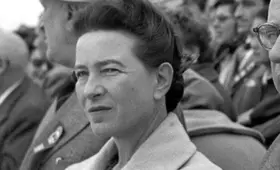
The Philosophy and Feminism of Simone de BeauvoirInstructor(s): Kate KirkpatrickCategories:Has Beauvoir's philosophy been overlooked? KCL philosopher and author of Becoming Beauvoir, Kate Kirkpatrick, draws on unpublished writings to interrogate her ground-breaking philosophy.
-
The Non-Existence of the Real World
philosophy
Jan Westerhoff
• Coming SoonInstructor(s): Jan WesterhoffCategories:The Non-Existence of the Real WorldDoes the external world really exist? Professor Jan Westerhoff of Oxford University combines the analytic methods of contemporary Western philosophy with a deep knowledge of Eastern thought to propose that there is no external world. -
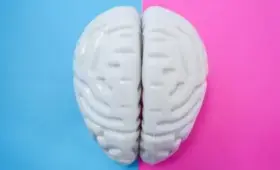
The Neuroscience of SexInstructor(s): Daphna JoelCategories:Are male and female brains really so different? Senior Professor of Psychobiology at Tel Aviv University, Daphna Joel, examines the latest research into the neurological differences between men and women.
-
The Philosophy of Quantum TheoryInstructor(s): Tim MaudlinCategories:How can we make sense of quantum mechanics? NYU philosopher of science and author of The Metaphysics of Physics puts forward his view of the philosophical insights hidden in the theory.
-
Intelligence vs CreativityInstructor(s): Marta HalinaCategories:What is creativity? Can machines replicate it? Cambridge philosopher and psychologist Marta Halina uses recent advances in psychology, neuroscience, and artificial intelligence to paint a new picture of the creative mind.
-
Strategy in the 21st CenturyInstructor(s): Lawrence FreedmanCategories:How has strategy changed through the ages? What global strategies are being employed today? Eminent Professor of War Studies at KCL and author of The Future of War, Lawrence Freedman, explores how we can navigate the new cyber and guerrilla warfare.
-
The Future of Being HumanInstructor(s): Anders SandbergCategories:Should we upgrade our bodies and minds? Fellow at Oxford’s Future of Humanity Institute, Anders Sandberg, investigates the road we must take to reach the mind-boggling possibilities of a transhuman future.
-
The Case Against RealityInstructor(s): Donald HoffmanCategories:Is reality how it appears? Or not as it seems? Professor of Cognitive Science and author of The Case Against Reality, Donald Hoffman, puts forward the radical suggestion that our perceptions fail to map onto reality.
-
Being Free in the Digital AgeInstructor(s): James WilliamsCategories:How can we lead meaningful lives amidst relentless and powerful forms of digital distraction? Ex-Google strategist turned Oxford ethicist James Williams invites us to rethink technology and take back control.
-
Rethinking Feminism, Sex and ViolenceInstructor(s): Finn MackayCategories:What goals should modern feminists adopt? “World-changing woman” (Guardian) and founder of the London Feminist Network Dr Finn Mackay outlines a bold new manifesto.
-
A Brief Guide to EverythingInstructor(s): John EllisCategories:The microscopic quantum world of fermions and bosons is a far cry from the grand expansion of the universe, yet they are connected. CERN’s John Ellis offers an account of what physicists do and don’t know.
-
Race, Gender and Invisibility: Why Intersectionality MattersInstructor(s): Kimberlé CrenshawCategories:How do attitudes to race and gender overlap to entrench injustice? Pioneer of intersectionality Kimberlé Crenshaw shows us a way of bringing hidden and neglected forms of discrimination to light to build a fairer society.
-
The History of SexInstructor(s): Véronique MottierCategories:What is sexuality and how does it reflect power relations within society? Award-winning Cambridge sociologist Véronique Mottier provides a provocative cultural history.
-
Nine Myths About SchizophreniaInstructor(s): Richard BentallCategories:Clinical Psychologist Richard Bentall challenges nine myths of schizophrenia accepted by mental health professionals and proposes a more humane, scientific approach to care.
-
Dark Matter of the MindInstructor(s): Daniel EverettCategories:Does the mind arise from the brain? Is the self a fantasy? American anthroplogist and linguist Daniel Everett interrogates our assumptions and questions if the self is made from more than just matter.
-
The Science of PsychedelicsInstructor(s): David NuttCategories:What impact do psychedelic drugs have on the brain? What does research show about their potential for use? Psychiatrist David Nutt examines the evidence behind some common misconceptions.
-
Biology Beyond GenesInstructor(s): Denis NobleCategories:Is the selfish gene metaphor radically misguided? Should we give up the idea that the gene is the foundation of life? Oxford biologist Denis Noble maps out the future for biology beyond the genome.
-
HallucinationsInstructor(s): Richard BentallCategories:Are the voices in our heads more than just mental disorders? Clinical psychologist Richard Bentall uncovers the origin of hallucinations and argues they have been radically misguided.
-
The Future of MoneyInstructor(s): Nigel DoddCategories:Money is the fantasy that makes the world go round. Where did it come from and what is its future? From the Bank of England to Bitcoin and the Bristol Pound, LSE sociologist Nigel Dodd explores.
-
What Philosophy Can DoInstructor(s): Amie ThomassonCategories:Can philosophy give us answers? Author of Fiction and Metaphysics and Ontology Made Easy, Amie Thomasson tackles philosophy's grandest aspiration and argues that its real value is its power to radically transform how we think.
-
Predicting OurselvesInstructor(s): Andy ClarkCategories:How do we think, dream and feel? Philosophy Andy Clark examines the ‘predictive brain’ approach – touted as a unifying theory for neuroscience – and explores its dramatic implications for science, psychiatry, and society.
-
The History of PrivatizationInstructor(s): Guy StandingCategories:From forests to city squares, parks to libraries, our common spaces are under attack. Economist Guy Standing traces the history of creeping privatization of the natural and social resources in the UK, and makes a passionate case for reform.
-
Atheism for the 21st CenturyInstructor(s): Michael RuseCategories:Must atheism be trimphalist and aggressive? Philosopher and author of Science, Evolution and Religion Michael Ruse takes the New Atheists to task and argues for a richer, more respectful and more morally reflective tradition of non-belief.
-
Neuroscience and Out of Body ExperiencesInstructor(s): Susan BlackmoreCategories:What can neuroscience tell us about out of body experiences? Psychologist Susan Blackmore investigates the new science of OBEs and finds unexpected insights into the self and consciousness.
-
Why The World Looks The Same In Any LanguageInstructor(s): John McWhorterCategories:Does the language we speak shape the way we think? John McWhorter explores the 'language hoax', claiming that despite magnificent variation, the world looks the same in any language.
-
How Stories Seduce UsInstructor(s): Stanley FishCategories:Arguments are woven throughout our public and private lives. What determines which win the day? Renowned literary and legal theorist Stanley Fish leads us through literature, politics and the domestic to reveal the power - and inevitability - of rhetoric.
-
Heidegger Meets Van Gogh: Art, Freedom and TechnologyInstructor(s): Simon GlendinningCategories:Have we become enslaved to technology? Is our fear of losing control our greatest danger? Director of the Forum for European Philosophy, Simon Glendinning explores Heidegger, art, and freedom.
-
Knowledge and RationalityInstructor(s): Corine BessonCategories:Is our knowledge of the world essentially rational? What does it mean to be burdened with the gift of rationality? Philosopher Corine Besson considers the nature of humanity's defining trait.
-
Narratives of EmpireInstructor(s): Kwasi KwartengCategories:What are the forces which drive empires? Historian and politician Kwasi Kwarteng examines imperial projects through history, arguing that narratives of dominance have played a crucial role.
-
Evidence and IdeologyInstructor(s): Nancy CartwrightCategories:From drug laws to terror threats, we want political decisions to reflect the facts. But is objective evidence impossible and the facts ours to interpret? Philosopher Nancy Cartwright investigates.
-
The Future of BeliefInstructor(s): John CottinghamCategories:Has our scientific age outgrown religion? Is faith still an essential component of human existence? Philosopher and theologian John Cottingham argues for the importance of religion in the modern world.
-
Realism in PerspectiveInstructor(s): Michela MassimiCategories:Can science and knowledge be true when they arise from a human vantage point? Philosopher of Science Michela Massimi brings together realism and perspectivism to forge a new kind of realism on science.
-
Unveiling RealityInstructor(s): Bryan RobertsCategories:Are there mysteries that science cannot explain? Do we still need philosophy in order to understand the universe? Philosopher of physics Bryan Roberts explores the limits of our greatest source of knowledge.
-
Why The World ExistsInstructor(s): John EllisCategories:Where did the universe come from? What don’t we understand about its future? From dark energy to cosmic inflation, theoretical physicist John Ellis gives a contemporary account of how it all began.
-
Harmony and BalanceInstructor(s): Frank WilczekCategories:From Dark Energy to Quantum Gravity, the cosmos remains mysterious. How should we approach the puzzles that remain? Nobel Laureate Frank Wilczek argues that, in science, beauty will lead us to truth.
-
The Universe As We Find ItInstructor(s): John HeilCategories:Didn’t science kill philosophy? Can metaphysics uncover the way the world is? Philosopher John Heil revives metaphysics and confronts the big questions of substance, causation, and consciousness.
-
Transformative Technologies and the Future of PunishmentInstructor(s): Rebecca RoacheCategories:From mind uploading to moral enhancement, future technologies will offer radical new possibilities for punishment. How should these new tools be used? Philosopher Rebecca Roache explores the future of justice.
-
The Sex Work FantasyInstructor(s): Julie BindelCategories:Is sex-work a job like any other? What lies behind the image of the ‘happy hooker’? Radical feminist activist and journalist Julie Bindel challenges an emerging neoliberal story.
-
Can You Be Moral in a Corrupt World?Instructor(s): Janne TellerCategories:Have globalisation and online anonymity broken down moral order? What should guide our actions in the 21st Century? Author of Nothing and former UN conflict resolution expert Janne Teller explores.
-
The World in Eleven DimensionsInstructor(s): Michael DuffCategories:General relativity and quantum mechanics are the most successful theories in science. But at least one is wrong. Imperial's Michael Duff outlines why M-theory is our only candidate for an ultimate theory.
-
Why The World Does Not ExistInstructor(s): Markus GabrielCategories:Can reality be described by a single theory? Does our failure to find a theory of everything expose the limits of knowledge, or might the world not exist at all? Philosopher Markus Gabriel explores.
-
How To Be A 'Promiscuous Realist'Instructor(s): James LadymanCategories:We take it for granted that the quantum fields and particles exist. Metaphysician James Ladyman provides reasons to be skeptical about scientific knowledge. Is the evidence too strong to be denied?
-
Why Diversity Should Be LimitlessInstructor(s): Chandran KukathasCategories:How should a free society accommodate cultural diversity? Should we tolerate the intolerable? Radical LSE political theorist, Chandran Kukathas explores the tension at the heart of modern liberal society.
-
The Neuroscience of LoveInstructor(s): Berit BrogaardCategories:Can love be rational? Are we ever in control? American philosopher of mind, Berit Brogaard outlines her new theory of love and uncovers the simple truths about the most complex emotion.
-
The Past and the Future of Artificial IntelligenceInstructor(s): Kenneth CukierCategories:Is AI humanity's savior, or do the threats outweigh its benefits? Best-selling author and Data Editor of The Economist, Kenneth Cukier uncovers how to be prepared for the next phase of human evolution.
-
New Adventures in SpacetimeInstructor(s): Eleanor KnoxCategories:We live in the moment. Or so it might seem. King’s College philosopher of physics Dr Eleanor Knox reveals how Einstein’s work has radical implications for past, present, and future.
-
Physics: What We Still Don't KnowInstructor(s): David TongCategories:What’s left to discover at the deepest levels of reality? Professor of Theoretical Physics at the University of Cambridge David Tong gives his personal take on what we still don’t know.
-
The Infinite QuestInstructor(s): Peter CameronCategories:From Zeno to Gödel, philosophers and mathematicians have grappled with the infinite. Prize-winning mathematician Professor Peter Cameron proposes that infinity itself may be an illusion.
-
The Future of CapitalismInstructor(s): Anatole KaletskyCategories:Many thought the financial crash was a final blow to capitalism. Why does it still reign supreme? Chair of the Institute for New Economic Thinking Anatole Kaletsky outlines the shape of things to come.
-
Looking for The Meaning of LifeInstructor(s): Steve FullerCategories:Does it make sense to ask for a meaning to life, and if so what might it be? Philosopher and Auguste Comte Professor at Warwick, Steve Fuller approaches the ultimate Why?
-
Science vs. ReligionInstructor(s): Mark VernonCategories:What’s at the heart of the conflict between science and religion? Can it be solved? Philosopher and author Mark Vernon answers one of modernity’s most complex problems.
-
The Physics of the Possible and the Impossible: Constructor TheoryInstructor(s): Chiara MarlettoCategories:Is information fundamental to reality? Did the universe emerge from a bundle of bits? Oxford constructor theorist Chiara Marletto outlines the new theory which seeks to explain life, the universe and everything in it.
-
Are Animals Moral Agents?Instructor(s): Mark RowlandsCategories:Do we radically misclassify animals? University of Miami Professor of Philosophy Mark Rowlands challenges the boundaries between humankind and animals as minds and moral agents alike.
-
Fear and Trembling in the 21st CenturyInstructor(s): Clare CarlisleCategories:From Paris to Palestine, the perils of undying faith still hold the world hostage. When should we abandon our beliefs? KCL philosopher Dr. Clare Carlisle reinterprets Kierkegaard's Fear and Trembling.
-
Nietzsche, God and the Search for MeaningInstructor(s): Christopher HamiltonCategories:If 'God is dead', what place does meaning and morality have in our lives? KCL philosopher and author of Living Philosophy Christopher Hamilton examines the perplexities of experience.
-
Beyond Beyoncé FeminismInstructor(s): Beatrix CampbellCategories:Has neoliberalism destroyed gender equality? Advocate, author and broadcaster Beatrix Campbell examines the emergence of a new model of patriarchy and proposes solutions.
-
The History of FearInstructor(s): Frank FurediCategories:We are less familiar with pain and suffering than our ancestors, yet new forms of fear play an ever-expanding role in 21st century life. Sociologist Frank Furedi asks why.
-
Understanding Race: Present and FutureInstructor(s): Remi AdekoyaCategories:Best-selling author of Biracial Britain and It's Not About Whiteness, It's About Wealth, Dr Remi Adekoya has been praised for his fresh and insightful approach to race. Join him to uncover the fundamental questions raised by racial identity.Start Time:
-
Heaven in DisorderInstructor(s): Slavoj ŽižekCategories:We are in a state of chaos; living in an age marred by economic inequality, international tensions and a climate crisis. However, Slavoj Žižek contends that the problems of the modern age provoke revolutionary momentum and change.
-
The Sociology of IdentityInstructor(s): Frank FurediCategories:Identity has played a crucial role in the modern era. Join Frank Furedi, a leading sociologist and one of the world's leading thinkers on cultural issues, as he explores the notion of ‘identity’ and charts the evolution of what identity means.
-
Brains, Computers, and the AI RevolutionInstructor(s): Rosalyn MoranCategories:In recent years, the research into AI has made dramatic strides in revolutionising writing, image generation, and computing capabilities. But how do these systems work? And what can the brain's processes teach us about optimising AI?
-
The Mysteries of Black HolesInstructor(s): Priyamvada NatarajanCategories:Black holes hold a privileged place within the popular imagination. Join the award-winning theoretical astrophysicist, Priyamvada Natarajan, as she unravels the science and mystery of these cosmic enigmas.
-
Medicine: The Need for a New ParadigmInstructor(s): David HealyCategories:David Healy, a world-leading Professor of Psychiatry, highlights how 'evidence-based medicine' has led to unscientific medical practice and the need to shift to a new paradigm.
-
The Role of Consciousness in EvolutionInstructor(s): Peter Godfrey-SmithCategories:How has consciousness both shaped, and been shaped by evolution?
-
Women vs The Free MarketInstructor(s): Vicky PryceCategories:Gender inequality shouldn't be a part of the free market. After all, surely the best person gets the job and is rewarded for their work. Vicky Pryce shows how this isn't the case.
-
Jane Austen: The Secret Radical
arts
Helena Kelly
• Coming SoonInstructor(s): Helena KellyCategories:Jane Austen: The Secret RadicalDespite accusations that sometimes history is rewritten to fit modern agendas, the re-analysis of the past is important to our understanding. But how should re-examining be done with historic literary giants? -
The politics of the bodyInstructor(s): Matthew BeaumontCategories:We normally think of our bodies aesthetically or biologically. But there is much to be learnt about the phenomenology and philosophy of our physique, and how it interacts with, reflects, and is part of our experience of the world.
-
Disrupting the Laws of PhysicsInstructor(s): Jacob BarandesCategories:We normally think of the laws of physics as fixed, universal constants — the unchanging backbone of reality. But there is much to be learnt about the philosophy of physical laws, and how they interact with, reflect, and are part of our deeper understandin